Your Step-by-Step Roadmap to Accessing Kazakhstan's Forex Markets as a US-Based Investor

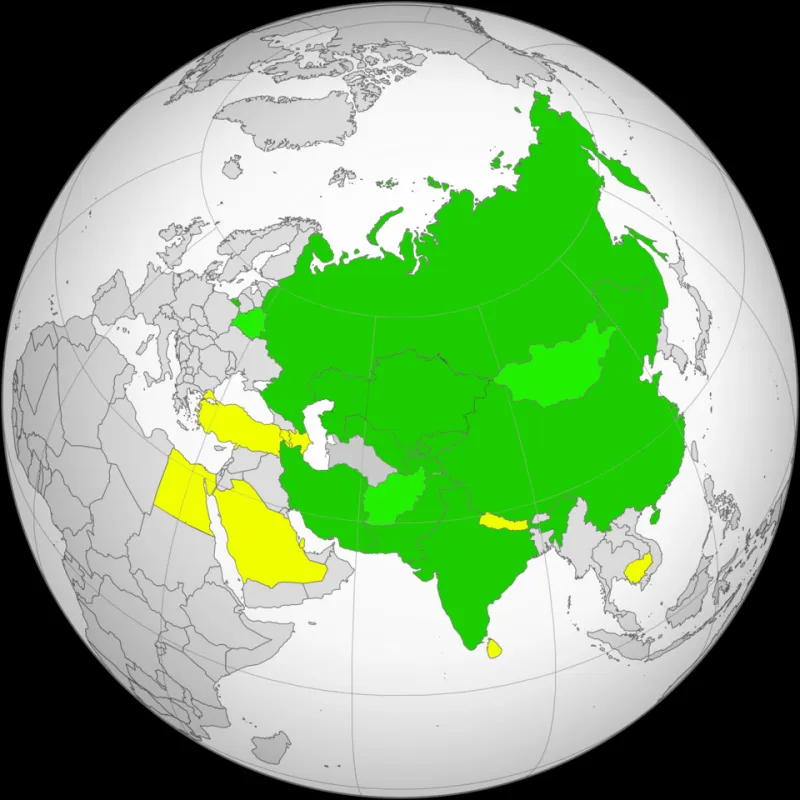
Photo: The original uploader was Myotus at English Wikipedia., Public domain, via Wikimedia Commons
Most American forex guides spend their pages on EUR/USD spreads, Federal Reserve rate cycles, and the mechanics of MetaTrader 4. They rarely venture east of Warsaw. For US investors who have identified Central Asian currency markets — and the Kazakhstani tenge in particular — as a genuine diversification opportunity, that gap in available guidance is frustrating. The information exists, but it is scattered across regulatory documents, broker disclosure forms, and compliance frameworks that require significant effort to synthesize.
This guide is designed to consolidate that information into a practical, sequential checklist. Whether you are a retail trader exploring tenge exposure for the first time or a more experienced investor seeking to formalize your Central Asian positioning, the steps below will help you move from curiosity to an active, compliant account without unnecessary detours.
Step 1: Understand the Regulatory Landscape Before Anything Else
The first thing US traders must accept is that American regulatory frameworks create meaningful constraints on overseas forex participation. The Commodity Futures Trading Commission (CFTC) and the National Futures Association (NFA) impose strict rules on forex brokers serving US residents. Under current CFTC regulations, brokers offering forex trading to Americans must be registered as Retail Foreign Exchange Dealers (RFEDs) — a designation that many international brokers, including some Central Asian platforms, do not hold.
This does not mean US traders cannot access tenge markets. It does mean you must be deliberate about how you structure that access. Your primary options include:
- CFTC-registered brokers that offer exotic currency pairs including KZT, either through spot forex or currency derivatives
- Internationally domiciled brokers operating in jurisdictions with US-person exemptions (note: this carries compliance risk and should be approached with legal counsel)
- Kazakhstan-based platforms like ForexKZ that provide analysis, market data, and structured access pathways designed for cross-border investors
Before funding any account, verify the broker's regulatory status directly on the NFA's Background Affiliation Status Information Center (BASIC) database at nfa.futures.org.
Step 2: Assess Your Broker Against a Central Asia–Specific Checklist
General broker comparison guides evaluate spreads, leverage ratios, and platform usability. Those factors matter, but Central Asian forex access requires additional due diligence criteria:
KZT pair availability. Confirm that the broker offers USD/KZT or cross pairs involving the tenge with genuine liquidity — not merely a listed instrument with no real market depth.
Tenge-specific data feeds. Quality brokers covering Central Asian markets should integrate National Bank of Kazakhstan reference rates and provide access to regional economic calendars, not just Bloomberg or Reuters generic feeds.
Execution infrastructure. Ask explicitly whether the broker routes tenge orders through local interbank markets or relies on synthetic pricing. The difference has meaningful implications for spread quality during periods of KZT volatility.
Customer support with regional expertise. A broker whose support team cannot answer basic questions about NBK policy or Kazakhstan's export-driven monetary framework is unlikely to serve you well during fast-moving market events.
Withdrawal and conversion logistics. Confirm that the broker can process USD withdrawals efficiently from tenge-denominated positions. Some platforms impose conversion delays or unfavorable internal exchange rates that erode trading returns.
Step 3: Prepare Your Documentation
Opening any forex account as a US resident requires standard Know Your Customer (KYC) documentation. For accounts with a Central Asian focus, expect additional scrutiny given the region's enhanced due diligence classification under the Financial Crimes Enforcement Network (FinCEN) framework.
Typically required documents include:
- Government-issued photo identification (US passport strongly preferred for international accounts)
- Proof of US residential address (utility bill or bank statement dated within 90 days)
- Social Security Number or Individual Taxpayer Identification Number
- Source-of-funds declaration for initial deposits above certain thresholds (commonly $10,000)
- W-9 form for US tax certification purposes
Some brokers with Central Asian operations may also request a brief questionnaire about your trading experience and investment objectives as part of regulatory suitability screening. Answer these accurately — they inform both account tier access and the leverage limits applied to your positions.
Step 4: Navigate the Account Funding Process
Funding a forex account oriented toward Central Asian currencies introduces logistical considerations that domestic accounts do not. Wire transfers remain the most reliable mechanism for initial deposits, though processing times can extend to three to five business days for international routing.
Key considerations at this stage:
SWIFT routing accuracy. Errors in correspondent bank details are among the most common causes of funding delays. Request the broker's complete SWIFT instructions in writing and verify them independently before initiating the transfer.
Bank-level scrutiny. Major US banks — particularly JPMorgan Chase, Bank of America, and Wells Fargo — apply enhanced transaction monitoring to wires destined for Central Asian financial institutions. Be prepared to provide your bank with a brief explanation of the transfer's purpose. This is routine and not cause for concern, but it can add one to two business days to processing.
Currency conversion timing. If your account is denominated in KZT, the USD-to-KZT conversion will occur at either the broker's internal rate or the prevailing NBK reference rate, depending on the platform's structure. Clarify this before funding — the difference can be material during periods of tenge volatility.
Step 5: Address Your US Tax Reporting Obligations
This step is where many American traders stumble, and the consequences of getting it wrong are significant. Forex trading gains and losses for US residents are governed primarily by Section 988 of the Internal Revenue Code, which treats most spot forex transactions as ordinary income or loss.
However, traders who actively elect Section 1256 treatment can benefit from the 60/40 rule — 60 percent of gains taxed at long-term capital gains rates, 40 percent at short-term rates — if their positions qualify as regulated futures contracts. Consult a CPA with international tax experience before making this election, as the classification of tenge-denominated instruments under Section 1256 depends on the specific contract structure offered by your broker.
Additional reporting obligations to be aware of:
FBAR (FinCEN Form 114). If your foreign forex account balance exceeds $10,000 at any point during the calendar year, you must file an FBAR by April 15 (with automatic extension to October 15). Failure to file carries severe civil and criminal penalties.
Form 8938 (FATCA). US taxpayers with foreign financial assets above specified thresholds ($50,000 for single filers, $100,000 for joint filers) must file Form 8938 with their annual tax return.
Broker-issued tax documents. Confirm whether your broker issues a Form 1099-B or equivalent annual statement. Many international brokers do not, which means you are responsible for maintaining your own complete trading records.
Step 6: Start Small and Build Familiarity Before Scaling
Central Asian forex markets have distinct behavioral characteristics — lower liquidity windows, sensitivity to NBK intervention signals, and correlation dynamics tied to commodity cycles — that differ meaningfully from the major pairs most American traders learned on. Even experienced forex participants benefit from a deliberate ramp-up period.
Consider beginning with a demo account to familiarize yourself with tenge spread patterns and regional market hours before committing live capital. Kazakhstan Standard Time (ALMT) is UTC+5, which means the most active local trading sessions occur when US East Coast markets are in the early morning hours. Factoring this timezone differential into your trading schedule is a practical necessity, not an afterthought.
Why ForexKZ Is Designed for Exactly This Journey
ForexKZ was built with the cross-border investor's experience explicitly in mind. Our platform integrates National Bank of Kazakhstan data feeds, regional economic calendars, and market commentary tailored to the currency dynamics that matter most to Central Asian forex exposure. For US traders navigating the compliance and logistics checklist outlined above, our team offers structured onboarding support designed to reduce friction at each stage of the process.
Accessing Kazakhstan's currency markets from a brokerage account in Chicago or Dallas is entirely achievable. The checklist above ensures that when you arrive, you are positioned to trade with clarity rather than scrambling to address regulatory or logistical gaps after the fact.