The Overlooked Diversifier: Why Central Asian Currencies Deserve a Place in the Modern US Investment Portfolio
Photo: Background: Map created from DEMIS Mapserver, which are public domain. Koba-chan, CC BY-SA 3.0, via Wikimedia Commons
The Diversification Problem Nobody Is Talking About
Ask a financial advisor in Chicago or Dallas to name the currencies they would consider for a diversified forex allocation, and you will likely hear a familiar list: the euro, the Japanese yen, the Swiss franc, perhaps the Australian dollar for commodity exposure. Central Asian currencies will not appear on that list. In most cases, they will not have been considered at all.
This omission is understandable. It reflects decades of institutional habit, the gravitational pull of liquid markets, and a research infrastructure that has historically focused its analytical resources on developed economies. But in an investment environment where correlations between traditional diversifiers have converged to uncomfortable highs — where the euro, pound, and Swiss franc increasingly move in lockstep during risk-off episodes — the logic of defaulting to G10 pairs deserves serious scrutiny.
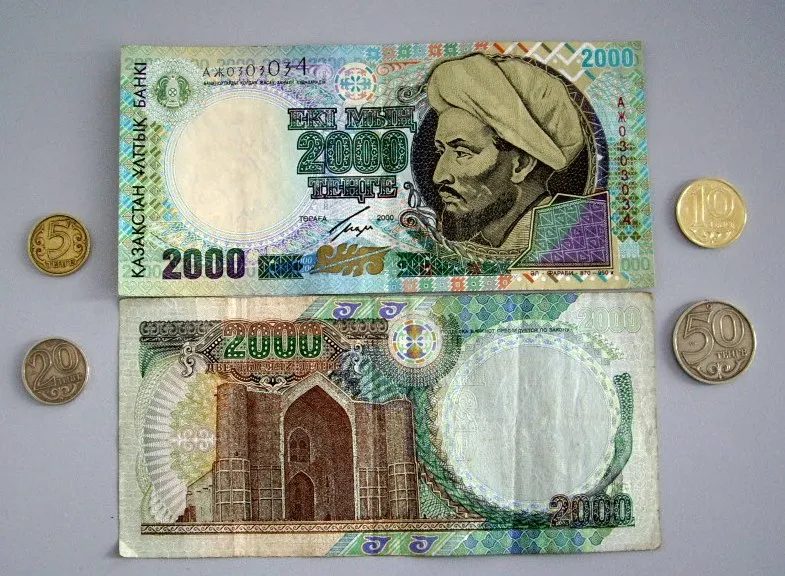
This piece argues that Central Asian currencies, specifically the Kazakhstani tenge (KZT) and the Uzbekistani som (UZS), represent a structurally undervalued diversification tool for US investors willing to move beyond the familiar. The argument rests not on speculation but on the observable mechanics of correlation, the direction of regional economic integration, and the forward trajectory of trade agreements that are quietly reshaping this part of the world.
Correlation Is the Real Risk
Modern portfolio theory teaches that diversification is most powerful when assets move independently of one another. Yet a persistent criticism of traditional forex diversification — particularly since the 2008 financial crisis — is that major currency pairs have become increasingly correlated during precisely the moments when diversification is most needed.
When the Federal Reserve signals a hawkish pivot, or when a global risk-off event triggers dollar demand, the euro, pound, Canadian dollar, and Australian dollar frequently decline in unison. The diversification benefit that investors anticipated on paper evaporates in practice, because the correlations that held during calm periods break down under stress.
Central Asian currencies behave differently, and the reason is structural rather than coincidental. The KZT and UZS are driven primarily by regional factors — oil and commodity prices in Kazakhstan's case, cotton and gold export revenues in Uzbekistan's — rather than by the broad dollar sentiment that simultaneously moves most G10 pairs. A risk-off episode centered on European sovereign debt or US equity market stress does not automatically translate into pressure on the tenge, because the transmission mechanism simply does not operate the same way.
Historical performance data, while limited by the relative novelty of accessible trading in these currencies, consistently shows lower rolling correlations between KZT/USD and the major dollar pairs than exist among the G10 currencies themselves. For investors building a portfolio designed to withstand a variety of stress scenarios, that distinction is not a minor technical footnote — it is the entire point of diversification.
The Geopolitical Reorientation Hiding in Plain Sight
Beyond correlation mechanics, there is a geopolitical story unfolding in Central Asia that has received inadequate attention in American financial media. The region is undergoing a meaningful economic reorientation, driven by a combination of factors that are likely to persist over the medium to long term.
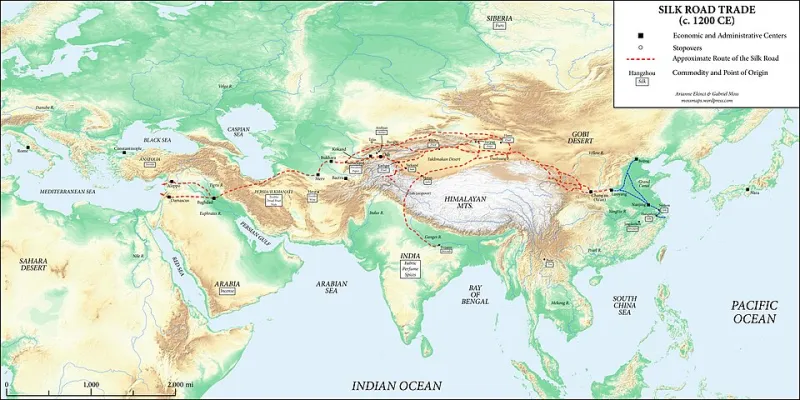
The disruption of traditional trade routes through Russia following 2022's geopolitical upheaval has accelerated the development of alternative corridors — the Trans-Caspian International Trade Route chief among them. Kazakhstan, which sits at the geographic center of this reorientation, has emerged as a critical transit hub connecting Chinese manufacturing with European and Middle Eastern markets. This is not a hypothetical future scenario; it is an active infrastructure and trade investment story that is already generating measurable increases in cross-border commerce.
For currency investors, increased trade flows mean increased demand for local currency settlement. As regional economies integrate more deeply — through the Eurasian Economic Union framework, through bilateral agreements between Kazakhstan and Uzbekistan, and through expanding Chinese investment in regional infrastructure — the structural demand for KZT and UZS in legitimate commercial transactions grows alongside it. This is a fundamentally different demand driver than the speculative flows that dominate most major currency pairs, and it carries different implications for long-term valuation.
What Traditional Portfolio Frameworks Are Missing
The standard diversification frameworks taught in American business schools and applied by institutional asset managers were largely constructed around the premise that the investable universe of currencies consists primarily of G10 pairs, supplemented occasionally by the Brazilian real, the Indian rupee, or the South Korean won. Central Asia was an afterthought, if it appeared at all.
That framework reflected the practical realities of its time: limited market access, opaque regulatory environments, and thin liquidity that made meaningful position-taking difficult for all but the most specialized investors. Many of those practical barriers have meaningfully diminished. Improved market infrastructure, expanding broker access, and the development of platforms specifically oriented toward regional currency trading — including ForexKZ's own analytical and execution capabilities — have lowered the entry threshold considerably.
The frameworks, however, have not caught up with the access. Most diversification models still treat Central Asian currencies as non-investable or categorize them alongside the broadest emerging market basket, obscuring the specific characteristics that make them genuinely distinctive. Investors and traders who rely on those models are, in effect, operating with an outdated map.
A Practical Entry Point for US Investors
For American investors considering an initial allocation to Central Asian currencies, a measured, systematic approach is more appropriate than a large directional bet. The goal in the early stages is not to maximize exposure but to understand the market's behavior — its response to oil price movements, its sensitivity to regional political developments, its liquidity profile at different times of the trading day.
Starting with KZT/USD exposure, given Kazakhstan's more developed market infrastructure and greater analytical coverage relative to other regional currencies, provides a reasonable foundation. From there, investors who develop confidence in their understanding of regional dynamics can consider supplementing with UZS exposure, which offers an even lower correlation profile but requires greater research investment.
Position sizing should account for the genuine liquidity differences between Central Asian pairs and major currencies. This is not a reason to avoid the market; it is a reason to size positions appropriately and to work with platforms that have direct regional expertise.
The Case for Looking East
The history of successful portfolio diversification is, in many ways, a history of looking where others are not looking — of recognizing value in markets that institutional consensus has not yet fully priced. Central Asian currencies are not a guaranteed return, and no responsible analyst would present them as such. They carry risks that require genuine understanding: political risk, regulatory risk, and the liquidity considerations inherent in any smaller market.
But the combination of structural low correlation, improving market access, and a regional economic integration story that is only beginning to attract mainstream attention creates a compelling case for inclusion in a thoughtfully constructed diversification framework. The investors who build that understanding now, before the consensus catches up, are the ones most likely to benefit from what Central Asia's currency markets have to offer.