Kazakhstan's Monetary Reset: What the Tenge's New Volatility Means for American Day Traders
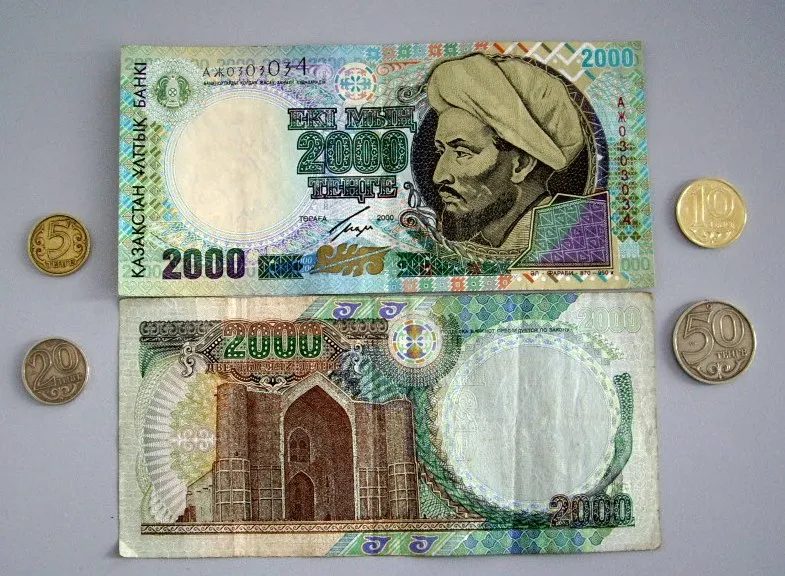
Photo: No machine-readable author provided. Burumbator assumed (based on copyright claims)., Public domain, via Wikimedia Commons
A Currency Market Hiding in Plain Sight
When most American day traders think about emerging market currencies, their attention gravitates toward the Brazilian real, the South African rand, or perhaps the Turkish lira. Kazakhstan's tenge — the KZT — rarely enters that conversation. That oversight, however, is increasingly becoming a costly one for traders who prioritize diversification and seek asymmetric opportunity.
Over the past several years, the National Bank of Kazakhstan has pursued a deliberate recalibration of its monetary framework, transitioning away from a managed float and toward a more market-responsive exchange rate mechanism. The practical consequence of this shift has been a measurable increase in intraday price movement, a development that, for disciplined day traders, translates directly into opportunity.
At ForexKZ, we have observed this transition closely. What follows is a structured analysis of the policy drivers behind tenge volatility, the trading strategies that align most effectively with reform-cycle dynamics, and the structural advantages that well-prepared US traders can realistically expect to capture.
The Policy Triggers Behind KZT Fluctuations
To trade the tenge effectively, one must first understand what moves it. Unlike major currency pairs, where price action is often driven by broad macroeconomic sentiment or Federal Reserve communications, the KZT responds to a more specific set of catalysts.
Oil price correlation remains the most powerful single driver. Kazakhstan is one of the world's top ten crude oil producers, and the national budget is heavily tied to hydrocarbon revenues. When Brent crude moves sharply — whether due to OPEC+ decisions, geopolitical disruptions in the Middle East, or unexpected shifts in global demand — the tenge typically follows with a lag of hours to days. Traders who monitor oil futures alongside KZT pairs can often position ahead of broader market reaction.
Central bank intervention windows represent a second, more tactical trigger. The National Bank of Kazakhstan has been transparent about its willingness to smooth excessive volatility, but the thresholds at which it acts have shifted as the managed float has loosened. Identifying those intervention bands — through a combination of historical price data and official communications — allows traders to anticipate potential reversals at key levels.
Seasonal trade flow patterns add a third layer. Kazakhstan's export calendar, which includes not only oil but also wheat, copper, and uranium, creates recurring periods of elevated currency demand. These seasonal rhythms are less well-documented in Western financial media, which means traders who invest time in understanding them gain an informational edge that is difficult to replicate simply by following mainstream analysis.
Reform Cycles and the Volatility Premium
Currency reform cycles in emerging markets have a well-documented behavioral signature. In the early stages of liberalization, as a central bank loosens its grip on the exchange rate, volatility rises sharply. Market participants who were previously anchored to a managed rate must reprice their expectations, and that repricing is rarely smooth.
Kazakhstan is currently navigating what might be described as a middle phase of this cycle. The most acute adjustment volatility has passed, but the tenge has not yet settled into the lower-volatility equilibrium that typically characterizes a fully mature float. This intermediate stage tends to produce the most favorable conditions for day traders: volatility is elevated enough to generate meaningful intraday ranges, but the underlying directional drivers are sufficiently identifiable to support systematic strategy development.
For comparison, consider the experience of traders who positioned in the Mexican peso during Mexico's early post-NAFTA monetary reforms, or those who studied the Polish zloty during Poland's EU accession period. In both cases, traders who understood the structural context of reform-driven volatility captured returns that were largely uncorrelated with their existing book.
Strategies That Work During Reform Cycles
Not every day-trading approach translates effectively to reform-cycle currencies. Momentum strategies, which work well in trending developed-market pairs, can be treacherous in markets where central bank intervention can abruptly reverse price action. Range-bound strategies, by contrast, can underperform during the periods of sustained directional movement that reform cycles periodically produce.
The approaches that tend to generate the most consistent results in this environment share several characteristics.
Event-driven positioning — building trades around scheduled central bank meetings, oil market announcements, or government budget disclosures — aligns naturally with the KZT's fundamental drivers. Traders who maintain a calendar of Kazakhstan-specific macro events and cross-reference it with oil futures positioning are effectively operating with a more complete information set than those relying solely on technical signals.
Asymmetric risk structures are particularly well-suited to reform-cycle environments. Because intervention risk is real and can compress downside moves quickly, strategies that limit loss exposure while preserving upside participation — through options structures or carefully managed stop placement — tend to outperform simple directional bets.
Correlation-adjusted sizing is essential for US traders who already hold positions in commodity-linked currencies such as the Canadian dollar or the Australian dollar. Given the KZT's oil sensitivity, adding tenge exposure without accounting for existing commodity correlation can inadvertently increase portfolio risk rather than reduce it.
The Informational Edge American Traders Can Develop
One of the most significant advantages available to US traders in the KZT market is precisely its relative obscurity in Western financial media. Coverage of Kazakhstani monetary policy in American financial publications is sparse. Analyst consensus estimates for KZT moves are thin. This informational asymmetry cuts both ways — it demands more independent research — but it also means that well-prepared traders are not competing against the same crowded consensus that dominates major currency pairs.
Platforms such as ForexKZ are specifically designed to bridge this gap, providing regional market intelligence, real-time analysis of National Bank of Kazakhstan communications, and contextual data on the commodity and trade flows that drive tenge price action. For American day traders accustomed to operating in highly efficient, well-covered markets, the learning curve is real but manageable — and the potential for differentiated returns justifies the investment in regional expertise.
A Measured but Genuine Opportunity
The tenge is not a currency for every trader, and the volatility it currently offers comes with commensurate complexity. Liquidity conditions differ from those in major pairs, execution considerations require attention, and the research burden is higher than in more widely followed markets.
Nevertheless, for American day traders who are willing to invest in understanding Kazakhstan's monetary policy environment, the current reform cycle represents a genuine and underappreciated opportunity. The patterns are identifiable, the drivers are logical, and the competition — at least from well-informed Western participants — remains limited. That combination does not stay available indefinitely.