Beyond the Dollar and Euro: Why Savvy US Traders Are Turning Their Attention to Central Asian Currency Markets
Photo: European Space Agency, Attribution, via Wikimedia Commons
For decades, American forex traders have operated within a familiar universe — dollar pairs, euro crosses, and the occasional foray into Japanese yen or British pound positions. The playbook has been well-worn, the analytical tools refined over generations of market participation. Yet in 2024 and beyond, a growing cohort of institutional and retail traders alike are casting their gaze eastward — specifically toward Central Asia, a region that is rapidly transforming from a geopolitical footnote into a legitimate financial frontier.
At ForexKZ, we occupy a unique vantage point in this evolution. Positioned at the intersection of regional market intelligence and global trading infrastructure, we have watched firsthand as Kazakhstan and its neighboring economies attract serious attention from international capital. The question for US traders is no longer whether Central Asian markets matter — it is whether they can afford to ignore them.
Understanding the Tenge: A Currency With Its Own Logic
The Kazakhstani tenge (KZT) does not behave like the currencies most American traders are accustomed to analyzing. Its volatility patterns are shaped by a distinct set of forces: oil price fluctuations from the Tengiz and Kashagan fields, Russian ruble correlation dynamics, Chinese yuan linkages through bilateral trade, and periodic interventions by the National Bank of Kazakhstan.
This complexity, which might initially seem like a liability, is precisely what creates opportunity. The tenge's correlation with Brent crude is well-documented — when oil prices move sharply, the KZT tends to follow with measurable consistency. For traders who already incorporate commodity correlations into their dollar-based strategies, this relationship offers a familiar analytical framework applied to an unfamiliar asset. The spread between expected and actual tenge movement during commodity shocks has historically produced tradeable dislocations that attentive market participants can exploit.
Furthermore, since Kazakhstan moved to a free-floating exchange rate regime in 2015, the tenge has demonstrated volatility profiles that differ meaningfully from major currency pairs. Standard deviation analyses reveal periodic clustering of large daily moves — patterns that systematic traders, in particular, may find worth modeling.
Geopolitical Shifts as Market Catalysts
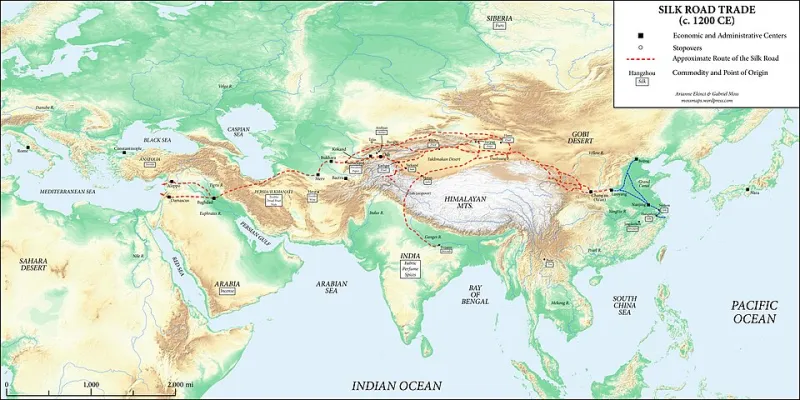
The broader geopolitical reconfiguration underway across Eurasia is not merely a matter for foreign policy analysts. It carries direct implications for currency valuations and capital flows throughout the region.
Since 2022, Kazakhstan has found itself navigating a careful diplomatic path between Western partners, Russia, and China. This balancing act has produced tangible economic consequences: redirected trade routes, new banking relationships, and an influx of foreign businesses establishing regional headquarters in Almaty and Astana. Each of these developments influences the tenge's supply-demand dynamics and, by extension, its exchange rate behavior.
For US traders, this geopolitical complexity translates into a market where fundamental analysis carries significant weight. Macroeconomic data releases from the National Bank of Kazakhstan, policy statements regarding capital controls, and bilateral trade agreements with Gulf Cooperation Council nations all serve as potential market-moving events. Traders who develop fluency in reading these signals gain an informational edge that is simply unavailable in the heavily covered major currency markets.
Neighboring currencies — the Uzbekistani som, the Kyrgyzstani som, and the Azerbaijani manat — are similarly influenced by regional dynamics, though each carries its own distinct risk profile and liquidity characteristics. Understanding the interplay between these currencies can provide context for broader regional positioning.
Practical Access: How US Traders Can Enter These Markets
A legitimate concern for American investors is the practical question of market access. Central Asian forex markets are not as seamlessly integrated into global trading infrastructure as, say, the EUR/USD or USD/JPY markets. Liquidity can be thinner, spreads wider, and execution more complex — particularly for retail traders accustomed to the tight conditions available on major pairs.
This is where specialized regional platforms become essential partners rather than optional conveniences. ForexKZ provides US-based traders with structured access to tenge-denominated positions alongside analytical resources calibrated to regional market conditions. Rather than attempting to trade these markets through generalist brokers with limited regional expertise, working with a platform that maintains active presence in Kazakhstan offers meaningful advantages in terms of pricing, execution quality, and market intelligence.
From a regulatory standpoint, US traders should familiarize themselves with the framework governing foreign currency transactions, including applicable FBAR reporting requirements for foreign accounts and any relevant CFTC guidelines pertaining to exotic currency trading. Consultation with a qualified tax professional familiar with international investment structures is advisable before establishing significant exposure.
Position sizing deserves particular emphasis in emerging market contexts. The risk management principles that govern major pair trading apply here with even greater urgency. Wider spreads and occasional liquidity gaps mean that stop-loss placement requires more conservative calibration. Many experienced emerging market traders recommend beginning with smaller position sizes while building familiarity with a new currency's behavioral characteristics.
Why Diversification Into This Space Makes Analytical Sense
Modern portfolio theory has long advocated for diversification across uncorrelated assets. Central Asian currency positions, when sized appropriately, can fulfill this function within a broader forex portfolio. The tenge's primary drivers — oil prices, regional geopolitics, and Sino-Russian economic dynamics — have limited overlap with the factors that move EUR/USD or GBP/USD. This relative independence can provide genuine diversification benefits rather than the illusory diversification that comes from holding multiple positions in highly correlated major pairs.
Additionally, the emerging market premium — the higher expected return that compensates for elevated risk — remains meaningful in this region. As Kazakhstan continues to develop its financial infrastructure and attract foreign investment, the sophistication of its currency markets is increasing. Early participants in this evolution may benefit from conditions that become less favorable as the market matures and additional capital flows in.
The ForexKZ Perspective
At ForexKZ, our mission is to serve as a reliable bridge between global trading capital and Central Asian market opportunities. We recognize that US traders approach this region with legitimate questions about risk, access, and analytical methodology. Our commitment is to provide the market intelligence, platform infrastructure, and educational resources necessary for informed participation.
The currency markets of Central Asia are not a replacement for established trading strategies — they are a complement to them. For American traders willing to invest the time in understanding a new market's unique characteristics, the potential rewards, both in terms of returns and genuine portfolio diversification, are worth serious consideration.
The frontier is open. The question is who will be positioned to benefit when the broader market catches up.