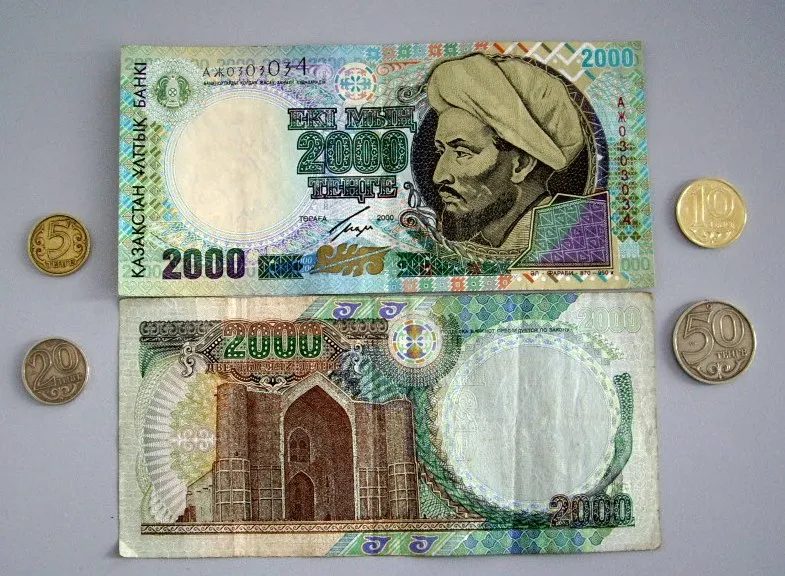
Trading the Tenge from Thousands of Miles Away: A US Trader's Field Guide to Kazakhstan's Currency Volatility
Most American forex traders have never once thought about the Kazakhstani tenge. That oversight may be costing them meaningful opportunities. While the EUR/USD and GBP/USD dominate retail trading desks from New York to Los Angeles, a small but growing cohort of US-based currency traders has quietly been building positions around KZT pairs — and profiting from a volatility profile that most major currencies simply cannot match.
The tenge is not a casual instrument. It demands research, patience, and a disciplined risk framework. But for traders who invest the time to understand its underlying drivers, it offers something increasingly rare in today's compressed-spread major-pair environment: genuine, structurally motivated price movement.
Why the Tenge Moves the Way It Does
To trade any currency intelligently, you first need to understand what makes it tick. The tenge's price action is governed by three interlocking forces that create a fairly predictable — though never guaranteed — set of catalysts.
Crude oil and commodity revenues. Kazakhstan is one of the world's top fifteen oil producers, and petroleum exports account for the majority of the country's foreign exchange earnings. When Brent crude rises, the tenge tends to strengthen as export revenues flow back into the domestic economy. When oil falls sharply — as it did in 2014-2015 and again during the 2020 pandemic shock — the tenge comes under immediate and severe pressure. US traders who already monitor energy markets have a meaningful informational advantage here: the same Bloomberg or TradingView terminal tracking WTI futures can serve as an early-warning system for tenge directional bias.
The National Bank of Kazakhstan's monetary posture. The NBK does not operate like the Federal Reserve. Its communication style is less transparent, its interventions are less predictable, and its policy decisions carry outsized weight relative to what most Western traders expect from a central bank of similar size. Rate decisions, foreign currency intervention announcements, and shifts in reserve management strategy can all move KZT pairs sharply within a single session. Monitoring the NBK's official releases — available in English on their website — is non-negotiable for anyone holding tenge-denominated positions.
Geopolitical and regional spillover. Kazakhstan shares borders with both Russia and China, a geographic reality that has profound currency implications. Sanctions pressure on Russia, shifts in Chinese capital flows, and regional security events all create secondary volatility in the tenge. The 2022 sanctions regime imposed on Russia, for instance, generated significant KZT turbulence as traders recalibrated cross-border trade and remittance flows. Staying current with Central Asian geopolitical developments — something ForexKZ covers extensively — is part of the analytical homework.
Real Scenarios: What Tenge Trades Actually Look Like
Let's walk through two illustrative trading scenarios that reflect the kind of setups experienced tenge traders look for.
Scenario One: The Oil Spike Setup. Suppose OPEC announces an unexpected production cut on a Tuesday afternoon Eastern Time. Brent crude jumps 4% within two hours. A trader monitoring USD/KZT on a platform that offers the pair would reasonably anticipate tenge appreciation pressure — meaning USD/KZT should move lower as the tenge strengthens. Entering a short USD/KZT position with a tight stop above the pre-announcement high and a target at a nearby technical support level offers a defined-risk trade with a clear fundamental catalyst. The key is speed: currency markets price in commodity shocks quickly, so position entry within the first thirty to sixty minutes of the announcement captures the most directional movement.
Scenario Two: The NBK Rate Decision Fade. When the NBK holds rates steady in an environment where the market had partially priced in a cut, the tenge often sees a brief, sharp appreciation before retracing. A trader who has reviewed NBK meeting schedules — published quarterly on the central bank's website — can position ahead of the announcement and then manage the trade dynamically based on the actual decision. This kind of event-driven setup is common across all major central banks; the tenge simply adds an emerging-market volatility premium that can amplify the move.
Managing Risk Across Timezones
One of the most frequently cited concerns among US traders considering emerging-market currency pairs is the timezone mismatch. Almaty is eleven hours ahead of Eastern Time, which means the most liquid trading window for KZT pairs often occurs while American traders are asleep.
This is a real constraint, but it is manageable. Several practical approaches help US-based traders navigate it effectively.
First, use limit orders and conditional entries rather than attempting to monitor the market in real time during Almaty's business hours. Platforms that support OCO (one-cancels-the-other) orders allow traders to pre-define both entry and stop levels before going to sleep, capturing overnight moves without requiring active supervision.
Second, focus on the US afternoon session overlap. While there is no formal trading overlap between New York and Almaty in the same way that London and New York share hours, major commodity news — which drives much of the tenge's directional movement — typically breaks during US market hours. This means a significant portion of tenge-relevant catalysts occur at times when American traders are fully awake and able to react.
Third, size positions conservatively relative to your broader book. Emerging-market currency pairs carry wider spreads and lower liquidity than majors. A position that would represent 3% of your risk capital in EUR/USD might warrant closer to 1% in USD/KZT. The volatility can work in your favor, but it requires a correspondingly tighter leash on overall exposure.
Platform Tools That Make a Difference
Not every retail forex platform offers KZT pairs, but the landscape is improving. When evaluating platforms for tenge trading, US traders should prioritize several specific features: access to USD/KZT and EUR/KZT pairs with competitive spreads, integration with commodity price feeds for real-time oil correlation monitoring, and robust alert systems that can notify you when price touches a predefined level during off-hours.
ForexKZ's platform is built specifically for traders seeking access to Central Asian currency markets, with tools calibrated to the unique rhythms of the tenge and its peer regional currencies. For US traders who are serious about adding this market to their rotation, having a dedicated analytical resource in the region — rather than relying on generic emerging-market commentary — is a substantive edge.
The Bottom Line
The tenge is not a currency for passive traders or those unwilling to engage with its specific set of drivers. But for disciplined US-based forex participants who are already tracking oil markets, monitoring central bank calendars, and thinking geopolitically about currency exposure, the KZT offers a compelling addition to the playbook. The distance between New York and Almaty is roughly nine thousand miles. With the right tools, the right analysis, and a structured risk framework, it need not be a barrier to participation.