Drifting Apart: How the Tenge Is Quietly Severing Its Ties to the Ruble—and Where That Leaves US Traders

For the better part of the last decade, any trader with exposure to the Kazakhstani tenge (KZT) understood an unwritten rule: watch the ruble, and the tenge would follow. The two currencies shared a gravitational pull rooted in deep trade integration, shared Soviet-era infrastructure, and the Eurasian Economic Union (EAEU) framework that bound Astana and Moscow in a web of economic interdependence. That rule is now being rewritten.
Kazakhstan's National Bank has been executing a quiet but deliberate pivot—one that is creating measurable divergence between the tenge and the ruble at both the policy level and in live market data. For US-based traders scanning emerging-market opportunities, this uncoupling represents more than a geopolitical footnote. It signals a structural shift in how Central Asian currency risk should be priced, modeled, and traded.
The Historical Correlation and Why It Existed
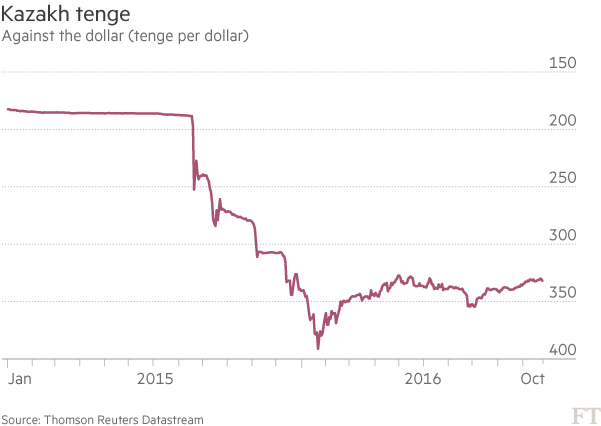
The tenge-ruble correlation was never merely coincidental. Russia remains Kazakhstan's largest trading partner, and the EAEU's customs union created conditions where monetary shocks in Moscow transmitted rapidly to Astana. When oil prices collapsed in 2014–2015, both currencies fell sharply. When Western sanctions hammered the ruble following Russia's 2022 military actions in Ukraine, the tenge initially wobbled in sympathy—a reflex rooted in decades of intertwined supply chains and shared commodity exposure.
But correlation is not destiny, and Kazakhstan's policymakers appear to have internalized that lesson with new urgency.
The Policy Divergence Driving the Split
Since 2022, Kazakhstan's National Bank has pursued a markedly different monetary trajectory than the Bank of Russia. While Moscow engaged in dramatic rate maneuvers driven partly by wartime fiscal pressures and capital controls, Astana moved more methodically—prioritizing inflation targeting, FX reserve accumulation, and currency band management designed to insulate the tenge from external shocks rather than amplify them.
Several specific policy moves stand out. Kazakhstan expanded its list of authorized currency trading partners, diversifying settlement mechanisms away from ruble-denominated transactions. The government accelerated efforts to denominate more commodity export contracts—particularly oil shipments routed through the Caspian Pipeline Consortium—in currencies other than the ruble. Meanwhile, the National Bank quietly expanded its gold and hard-currency reserves, giving it greater capacity to defend the tenge's value independent of what happens in Moscow.
The cumulative effect has been a meaningful compression in the rolling 30-day and 90-day correlation coefficients between KZT/USD and RUB/USD—a shift that quantitative traders tracking these pairs would have noticed in their models well before it made headlines.
Geopolitical Architecture of the Decoupling
Macroeconomic policy does not operate in a vacuum, and the tenge's drift away from the ruble reflects broader geopolitical recalibration. Kazakhstan has worked deliberately to present itself as a neutral transit hub—a positioning that serves its interests with Western investors, Chinese counterparts, and Gulf sovereign wealth funds simultaneously.
Astana's participation in Western-led sanctions enforcement, at least at the margins, has been notably more cooperative than Moscow might prefer. Kazakhstani banks have pulled back from transactions that could trigger secondary sanctions exposure, a pragmatic decision that has simultaneously reduced financial entanglement with the Russian banking system. This is not a clean break—Kazakhstan cannot afford to antagonize its northern neighbor—but it is a careful repositioning that has real monetary consequences.
The expansion of the Middle Corridor trade route, running through Kazakhstan toward Turkey and Europe while bypassing Russian territory, adds another dimension. As trade volumes along this corridor grow, Kazakhstan's currency becomes more sensitive to Turkish lira dynamics, euro zone demand signals, and Chinese yuan flows—and proportionally less tethered to ruble movements.
What the Data Is Telling US Traders Right Now
For US traders attempting to quantify the opportunity, several data points merit attention. First, the implied volatility spread between tenge and ruble options has widened, reflecting the market's recognition that these two instruments no longer move as a unified block. Second, cross-currency basis swaps involving KZT have begun to price in a risk premium that is increasingly idiosyncratic to Kazakhstan's own fundamentals rather than serving as a derivative of ruble sentiment.
This creates two distinct opportunity categories. The first is a relative-value trade: positioning for continued divergence between KZT and RUB by going long one against the other through NDF (non-deliverable forward) contracts, which remain the most accessible instrument for US-based participants who lack direct access to Kazakhstan's domestic interbank market. The second category involves using the tenge as a cleaner, less sanctions-contaminated proxy for Central Asian commodity exposure—particularly for traders who want oil-linked currency beta without the legal and compliance complications that ruble exposure now entails for US persons.
Risks That Deserve Equal Billing
A balanced assessment demands that the risks receive as much attention as the opportunities. Kazakhstan's economy remains substantially dependent on hydrocarbons, and oil price swings will continue to drive tenge volatility regardless of how successfully Astana decouples from Moscow. The tenge market is also notably thin by global standards, meaning that large position sizes can move prices in ways that would not occur in more liquid pairs—a structural hazard that US institutional traders must account for in their execution strategies.
Geopolitical risk runs in both directions. A deterioration in Kazakhstan-Russia relations could trigger capital flight and tenge weakness, while an unexpected rapprochement—or any scenario in which Kazakhstan feels compelled to realign more closely with Moscow—could quickly reverse the decoupling thesis. Traders building positions around this narrative should size accordingly and maintain clear stop-loss parameters.
Regulatory complexity adds another layer. US persons trading KZT-denominated instruments must navigate OFAC compliance carefully, particularly given the sanctions overlay affecting regional financial infrastructure. Working with a platform that has established, compliant access to Central Asian markets is not optional—it is a prerequisite.
The Longer Arc of This Story
The tenge-ruble uncoupling is not a short-term anomaly driven by a single policy decision or geopolitical event. It reflects a structural reorientation that Kazakhstan's leadership has been pursuing with quiet consistency over several years. The country is threading a difficult needle—maintaining functional relations with Russia while simultaneously deepening ties with China, the Gulf states, and Western financial institutions. Each of those relationships pulls the tenge in a slightly different direction, and the net result is a currency that is becoming genuinely more idiosyncratic.
For US traders, that idiosyncrasy is the opportunity. A tenge that moves on its own fundamentals—rather than as a ruble shadow—becomes a more interesting instrument, one that rewards careful analysis of Kazakhstan's domestic monetary policy, commodity export calendar, and geopolitical positioning rather than simply serving as a leveraged bet on Russian economic conditions.
At ForexKZ, we view this as one of the more consequential developments in Central Asian currency markets in recent years. Traders who take the time to understand the mechanics of this divergence—rather than relying on outdated correlation assumptions—will be better positioned to act when the next inflection point arrives.