Spread the Gap: A Practical Guide to Cross-Border Forex Arbitrage Between Kazakhstan's Domestic Markets and Global Exchanges
Arbitrage is one of the oldest strategies in finance — the art of exploiting price differences for the same asset across different venues. In mature markets like the EUR/USD or USD/JPY pairs, the windows close in milliseconds, squeezed shut by armies of high-frequency algorithms. But in frontier and emerging markets, those windows can remain open for seconds, minutes, or even longer. Kazakhstan's foreign exchange ecosystem sits in precisely this category, and for US traders willing to invest the time and infrastructure to understand it, the spreads between domestic Kazakhstani venues and global exchanges can offer genuine edge.
This is not a strategy for passive investors. Cross-border arbitrage in Central Asian markets demands technical preparation, an understanding of local market structure, and a clear-eyed appreciation of the risks involved. What follows is a structured examination of how those price gaps form, how they have materialized in recent market cycles, and what a US-based trader needs to execute effectively.
Why Price Gaps Exist Between Kazakhstan's Markets and Global Exchanges
The Kazakhstani tenge (KZT) is traded on the Kazakhstan Stock Exchange (KASE), which operates the primary domestic forex market. International participants can also access tenge-related pricing through offshore non-deliverable forward (NDF) markets, certain regional brokers, and cross-currency pairs routed through the Russian ruble or Chinese yuan.
The structural reasons for price divergence are well-documented. KASE operates on Almaty time (UTC+5), creating a window each trading day when Kazakhstani markets are active but major Western exchanges have not yet opened — or have already closed. During these hours, liquidity on the domestic side can thin considerably, and the bid-ask spread on USD/KZT tends to widen. If a macro event — an oil price move, a Federal Reserve statement, or a geopolitical development in the region — hits during this overlap gap, the domestic rate can lag behind the offshore price by a measurable margin.
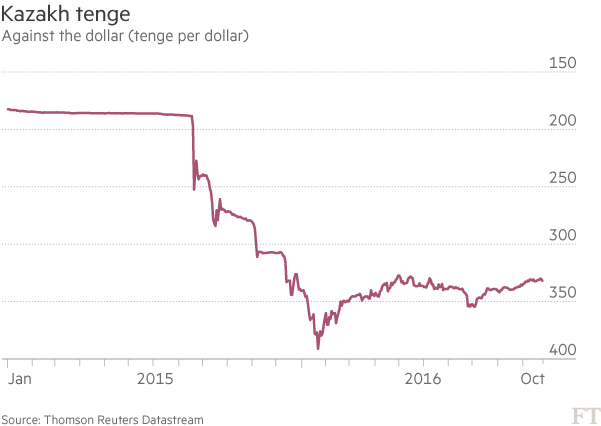
Additionally, capital flow restrictions and the National Bank of Kazakhstan's periodic interventions introduce friction that global algorithmic systems cannot instantly arbitrage away. When the central bank steps in to manage tenge volatility, it can temporarily pin the domestic rate at a level that diverges from where offshore participants are pricing the currency.
Recent Examples of Measurable Mispricing
In early 2024, following a sharp intraday decline in Brent crude prices, the USD/KZT rate on KASE moved more slowly than the NDF market implied. For a period of roughly 40 minutes during the Almaty morning session, offshore NDF pricing reflected a tenge that was approximately 0.6% weaker than the KASE spot rate. Traders with access to both venues could, in theory, buy tenge cheaply on the NDF side and offset the position at the stronger domestic rate — though execution friction and transaction costs would have consumed a portion of that spread.
A similar dynamic emerged during the period of elevated USD strength in the third quarter of 2023. As the dollar surged globally, KASE's USD/KZT rate adjusted more gradually than offshore proxies. Traders monitoring both the Bloomberg NDF screen and KASE's real-time feed identified a recurring pattern: domestic rates lagged offshore by 15 to 30 minutes during sessions when global dollar demand spiked sharply.
These are not enormous spreads by the standards of developed-market arbitrage. But in a currency pair where even institutional players often accept wide spreads as a cost of doing business, a consistent 0.3% to 0.7% mispricing — captured multiple times per week — accumulates meaningfully over a quarter.
The Regulatory Framework: What US Traders Need to Know
Before constructing any arbitrage strategy around Kazakhstan's markets, US-based traders must navigate a layered regulatory environment. On the American side, the Commodity Futures Trading Commission (CFTC) and the Financial Industry Regulatory Authority (FINRA) govern forex trading activity, and any offshore broker or venue used must meet the compliance standards required for US persons.
On the Kazakhstani side, the Agency of the Republic of Kazakhstan for Regulation and Development of the Financial Market (ARDFM) oversees forex activity. Foreign participation in KASE's currency market is permitted, but it typically requires working through a licensed local intermediary. Direct retail access for US persons is limited, making the NDF market and internationally licensed brokers offering KZT exposure the more practical entry points.
One important constraint: Kazakhstan maintains certain capital controls that can affect the repatriation of profits. Traders should consult with a qualified financial and tax advisor before establishing positions, particularly regarding the treatment of gains from NDF contracts under US tax law.
Building Your Arbitrage Detection Toolkit
Effective arbitrage requires infrastructure before it requires capital. Here is a practical framework for US traders looking to monitor Kazakhstan's cross-border price gaps:
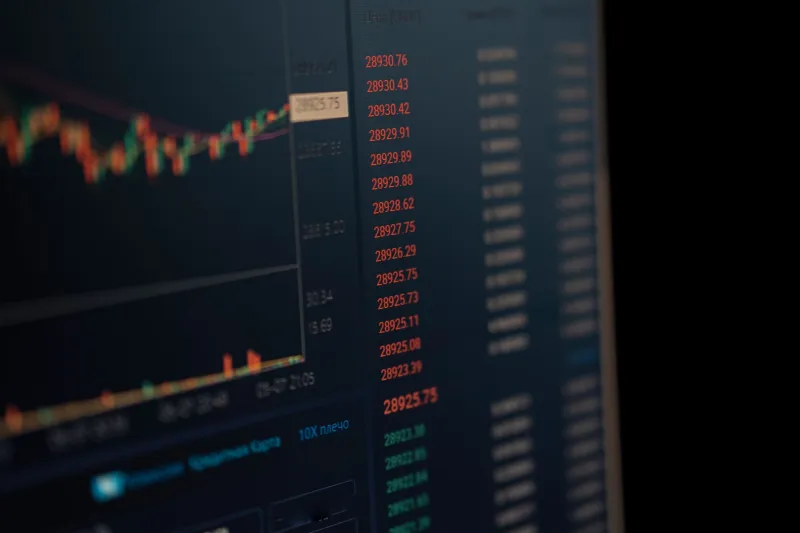
1. Dual-Feed Monitoring Set up simultaneous data feeds for KASE's USD/KZT spot rate and the offshore NDF mid-rate. Bloomberg Terminal and Refinitiv Eikon both carry KASE data, though with some latency. Supplementing with a direct API connection to a KASE-licensed broker significantly reduces that delay.
2. Spread Threshold Alerts Define a minimum spread threshold — accounting for transaction costs on both legs — below which the trade is not worth executing. Given typical bid-ask spreads and transfer costs, most practitioners set this floor at 0.4% to 0.5% for KZT arbitrage.
3. Macro Trigger Mapping Kazakhstan's tenge correlates strongly with oil prices, the Russian ruble, and Chinese yuan movements. Build a macro event calendar that flags moments of elevated divergence risk: OPEC+ announcements, Federal Reserve rate decisions, and National Bank of Kazakhstan intervention windows. These are the moments when domestic and offshore rates are most likely to separate.
4. Execution Speed and Counterparty Selection Latency matters even in a market as slow-moving as KZT. Choose counterparties with direct KASE connectivity and minimal order routing delays. For NDF legs, ensure your prime broker offers same-session settlement where possible.
5. Slippage and Liquidity Stress Testing Backtest your strategy using historical KASE volume data during low-liquidity windows. A spread that looks attractive on a mid-price basis can disappear entirely once market impact is factored in for larger position sizes.
The Honest Risk Assessment
No arbitrage strategy is truly risk-free, and cross-border KZT arbitrage carries several specific hazards that US traders must weigh carefully.
Settlement risk is the most immediate concern. If the domestic leg of a trade settles on a different timeline than the offshore NDF, the trader is exposed to price movement during the gap. Kazakhstan's settlement conventions differ from standard T+2 norms in some instruments.
Regulatory risk is also non-trivial. Kazakhstan's capital controls have been tightened and loosened at various points in recent years, and a sudden policy shift can strand open positions. The National Bank's willingness to intervene directly in the spot market means that apparent mispricings can be the result of deliberate policy action rather than market inefficiency — and betting against a central bank's stated policy is rarely a comfortable position.
Finally, operational risk looms large for traders without established local relationships. Executing on KASE through an unfamiliar intermediary introduces counterparty exposure that should be carefully evaluated.
The Bottom Line
Cross-border forex arbitrage in Kazakhstan is neither simple nor guaranteed. But for US traders prepared to invest in the right infrastructure, develop local market knowledge, and operate within a disciplined risk framework, the structural inefficiencies between KASE and global venues represent a genuinely differentiated opportunity. In a world where alpha in liquid markets is increasingly scarce, the frontier edges of Central Asian currency trading deserve serious analytical attention.
ForexKZ will continue to track these pricing dynamics and update readers as market conditions evolve. The spreads may be narrow, but for those positioned to capture them systematically, they are real.