Inflation Illusions: Why the Tenge Defies Every Model US Traders Bring to the Table
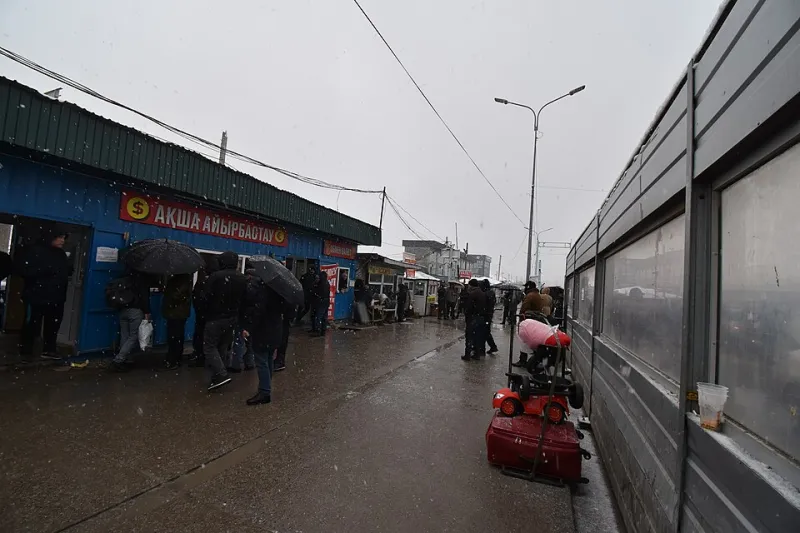
Photo: Fred Cherrygarden, CC BY-SA 4.0, via Wikimedia Commons
Most US-based forex traders learned their craft in markets where central bank credibility is largely assumed, inflation data is relatively transparent, and interest rate policy follows a reasonably predictable arc. The Federal Reserve, the European Central Bank, the Bank of England — whatever their flaws, these institutions communicate in ways that traders have spent decades learning to decode.
Then there is Kazakhstan's National Bank, and the tenge — a currency that consistently surprises traders who arrive armed with frameworks built for Frankfurt or Washington. The surprise is rarely pleasant, and it is almost never random. It is, instead, structural. It emerges from a specific and underappreciated relationship between how inflation is measured, how it is communicated, and how the tenge actually moves in response.
For US traders willing to do the analytical work, that structural gap is not a liability. It is an edge.
The Official Numbers and the Street Reality
Kazakhstan's Bureau of National Statistics publishes monthly consumer price index data that, on the surface, looks familiar enough. Categories, weightings, year-over-year comparisons — the format is recognizable. The problem is not the format. The problem is what the numbers tend to obscure.
Kazakhstan's consumer basket is weighted heavily toward food and energy, two categories that experience sharper and faster price swings than the diversified baskets used by the US Bureau of Labor Statistics. When global commodity prices spike — as they did dramatically in 2022 — the real purchasing-power erosion experienced by Kazakhstani households tends to run ahead of the headline CPI figure. Simultaneously, administered prices for utilities and fuel, which the government has historically managed to dampen political pressure, can suppress the official number even when underlying inflationary forces are intensifying.
The result is a recurring pattern: official inflation readings that lag or understate actual price pressure, followed by tenge depreciation that appears sudden to outsiders but was, in retrospect, entirely foreseeable if you were watching the right signals.
Why Western Analytical Frameworks Break Down
The standard Western playbook for trading inflation-sensitive currencies goes roughly like this: watch the CPI print, anticipate central bank rate moves, position accordingly in the currency. It is a model built on the assumption that the central bank's mandate is price stability and that it will act aggressively when that mandate is threatened.
Kazakhstan's National Bank operates under a more complicated set of pressures. The tenge's relationship with the Russian ruble — a legacy of deep trade integration and geographic proximity — means that monetary policy decisions are never made in isolation from what is happening in Moscow. When the ruble weakens sharply, as it did following sanctions escalation in 2022, the tenge faces imported depreciation pressure that has nothing to do with Kazakhstan's domestic inflation trajectory. The National Bank must then choose between defending the tenge and accepting the inflationary consequences of a weaker currency, a trade-off that does not map neatly onto the Taylor Rule logic that underlies most Western rate-forecasting models.
Furthermore, Kazakhstan's relatively shallow forex market means that liquidity conditions can amplify price moves in ways that would be absorbed more smoothly in a deeper market. A US trader accustomed to the EUR/USD's ability to digest large flows without dramatic slippage will find the tenge's responsiveness to capital movements genuinely different in character.
Reading the Signals That Actually Matter
If official CPI is an imperfect guide, what should US traders be watching instead? Several alternative indicators have historically provided earlier and more reliable signals of tenge stress.
Import price dynamics deserve particular attention. Kazakhstan is a significant importer of manufactured goods, electronics, and processed foods, predominantly from China, Russia, and the European Union. When the currencies of those trading partners move sharply — especially the Chinese yuan and the ruble — import cost pressure tends to feed through to domestic prices faster than official statistics capture. Monitoring yuan and ruble movements as leading indicators for tenge inflation pressure is a habit that pays dividends.
Credit growth data published by the National Bank offers another useful lens. Rapid retail credit expansion in Kazakhstan has historically preceded inflationary episodes and, subsequently, tenge depreciation as the central bank is forced to tighten. The lag between credit acceleration and currency impact is not perfectly consistent, but it is generally long enough to position ahead of the move.
Remittance flows are a less conventional but genuinely informative signal. Kazakhstan hosts a substantial labor diaspora, and remittance inflows — largely denominated in rubles and dollars — affect both the tenge's supply-demand balance and household spending patterns. Periods of elevated remittance inflows can temporarily mask inflation and support the tenge, creating false stability that eventually corrects.
The Asymmetry That Creates Opportunity
Here is the core insight that makes Kazakhstan's inflation-currency relationship genuinely interesting for US traders: the tenge tends to depreciate in sharper, more compressed episodes than it appreciates. The National Bank has, at various points, managed the exchange rate in ways that allow gradual strengthening during favorable periods but permit rapid adjustment when pressure becomes unsustainable.
This asymmetry — slow appreciation, fast depreciation — creates a specific type of positioning opportunity. Traders who identify the early signs of building inflation pressure and position for tenge weakness before the official data catches up can capture moves that are both significant in magnitude and relatively uncorrelated with the major currency pairs dominating most US trading portfolios.
The caveat, and it is a genuine one, is timing. The lag between the emergence of inflationary pressure and the tenge's response is not fixed. Political considerations, the timing of the National Bank's intervention threshold, and external shocks can all extend or compress the adjustment period. Position sizing and disciplined stop-loss management are not optional extras in this market — they are the difference between a profitable analytical edge and a costly one.
Building a Practical Framework
For US traders looking to incorporate tenge inflation analysis into an active strategy, the approach that tends to work best is one that treats official CPI as a lagging confirmation rather than a leading signal. Watch import costs, credit growth, and remittance data for the early warning. Monitor ruble and yuan volatility for the external transmission channel. And pay close attention to the National Bank's communication tone — shifts in language around inflation targets and exchange rate flexibility have historically preceded policy moves by enough time to be actionable.
The tenge is not a currency that rewards traders who approach it with the same mental models they use for the dollar-yen or pound-dollar. It rewards traders who take the time to understand the specific institutional and structural features that make Kazakhstan's inflation dynamics distinctive. That understanding is less common than it should be among US market participants — which is precisely why it remains a source of genuine analytical advantage for those willing to develop it.