Quiet Revolution: How Kazakhstan's Tenge Is Emerging as a Sleeper Asset in the Global De-Dollarization Story

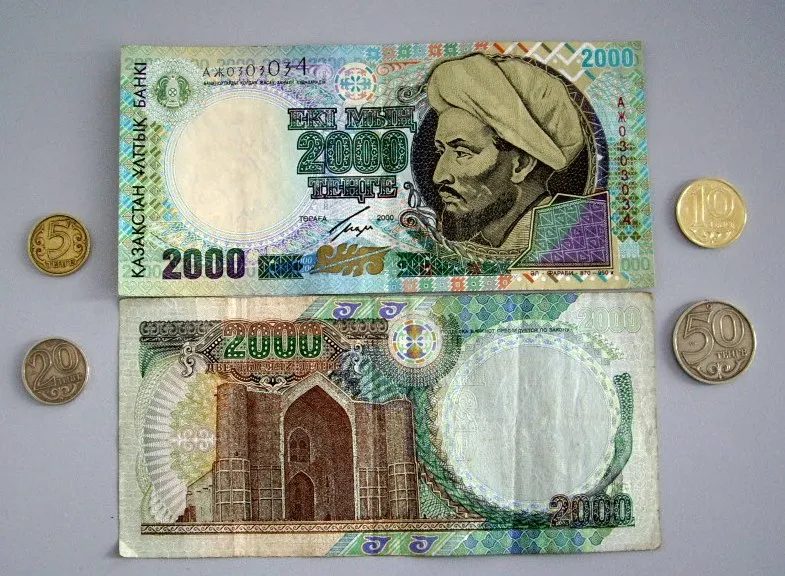
Photo: Fred Cherrygarden, CC BY-SA 4.0, via Wikimedia Commons
For most American traders, the phrase "de-dollarization" conjures images of BRICS summits, Russian ruble maneuvers, or Chinese yuan internationalization campaigns. What rarely enters that conversation is the role being quietly assembled by Kazakhstan and its Central Asian neighbors — economies that are methodically rerouting trade settlement infrastructure away from the US dollar, one bilateral agreement at a time.
The tenge may not headline financial news in New York or Chicago. But for investors paying close attention to structural currency shifts, Kazakhstan's monetary positioning is beginning to look less like a footnote and more like a leading indicator.
The Architecture of a Shift: How Bilateral Settlements Are Changing the Rules
Kazakhstan's trade relationships have undergone a meaningful transformation over the past decade. The country has moved progressively toward settling cross-border transactions in local currencies — particularly with China, Russia, and fellow members of the Eurasian Economic Union (EAEU). These are not marginal arrangements. China is Kazakhstan's largest trading partner, and bilateral trade volumes have expanded consistently, with an increasing share now denominated in yuan and tenge rather than dollars.
The mechanics are worth understanding. When Kazakhstan and China agree to settle a commodities transaction in yuan and tenge rather than converting through the dollar, the demand for USD in that transaction disappears entirely. Multiply that pattern across hundreds of trade flows — energy exports, agricultural commodities, manufactured goods — and the aggregate effect on dollar demand in the region becomes structurally significant.
Currency swap lines between the People's Bank of China and the National Bank of Kazakhstan have further reinforced this architecture. These agreements provide liquidity backstops that reduce the need for either party to hold large dollar reserves as a buffer, effectively lowering the friction cost of bypassing the greenback.
The Tenge's Unique Position in This Realignment
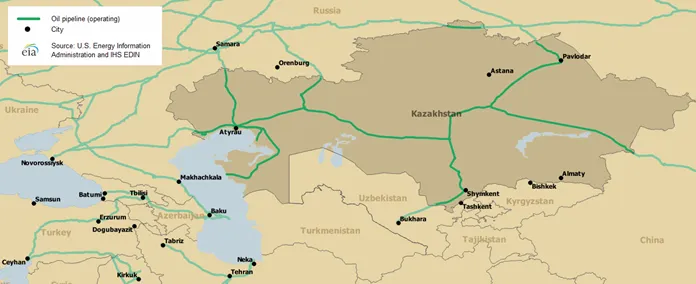
What distinguishes Kazakhstan from other emerging-market players pursuing de-dollarization is the country's commodity base. As one of the world's leading producers of oil, uranium, and grain, Kazakhstan brings genuine bargaining leverage to currency negotiations. Energy exporters that can credibly price their output in non-dollar terms hold structural power that purely import-dependent economies do not.
The National Bank of Kazakhstan has also demonstrated a willingness to allow the tenge to float within a managed band, giving the currency greater market responsiveness than many of its regional peers. This approach has attracted foreign institutional interest — cautious, measured interest, but interest nonetheless. For US traders accustomed to the binary choice between liquid major pairs and highly speculative frontier currencies, the tenge occupies a nuanced middle ground worth examining.
There is also a geopolitical dimension that American investors cannot afford to ignore. Kazakhstan has maintained what Astana describes as a "multi-vector" foreign policy — preserving ties with the United States, Europe, China, and Russia simultaneously. This balancing act means the tenge is unlikely to become a purely ideological instrument of dollar displacement. Instead, it functions as a pragmatic trade currency serving Kazakhstan's commercial interests, which makes it somewhat more insulated from the political volatility that undermines other de-dollarization experiments.
Practical Implications for US-Based Traders
So how does a trader based in Dallas or Denver actually position themselves to benefit from these dynamics?
The most direct route is through tenge-denominated instruments accessed via regulated forex platforms with Central Asian market access — platforms like ForexKZ that are specifically structured to connect Western investors with regional currency opportunities. Direct KZT/USD positioning allows traders to express a view on the tenge's long-term appreciation potential relative to the dollar, particularly as commodity cycles and regional trade integration support the currency's fundamentals.
A second approach involves monitoring the KZT/CNY cross more closely than most Western traders currently do. As yuan-tenge settlement volumes grow, price discovery in this pair will increasingly reflect genuine trade flows rather than speculative positioning — a characteristic that some systematic traders find more analytically tractable than the noise-driven major pairs.
For traders who prefer indirect exposure, consider the correlation between tenge movements and Brent crude pricing. Kazakhstan's fiscal breakeven oil price has historically anchored tenge valuation, meaning that traders with a constructive view on energy markets can use the tenge as a leveraged — but fundamentally grounded — proxy for that thesis.
Managing the Risks That Come With the Opportunity
It would be intellectually dishonest to present Kazakhstan's de-dollarization positioning purely as upside. Several risk factors deserve candid acknowledgment.
First, the tenge remains susceptible to external shocks that are largely outside Kazakhstan's control. A sharp deterioration in China-US trade relations, a significant commodity price collapse, or renewed instability in Russia can all transmit rapidly into tenge volatility. US traders accustomed to the relative predictability of EUR/USD or GBP/USD will need to recalibrate their risk models accordingly.
Second, the de-dollarization narrative itself carries execution risk. Bilateral settlement agreements can be unwound, swap lines can expire, and political calculations can shift. Kazakhstan's multi-vector policy is a strength in stable times but a source of unpredictability when great-power tensions escalate.
Finally, liquidity constraints in the tenge market mean that large position sizes can move prices in ways that are unfamiliar to traders accustomed to deep major-pair order books. Position sizing discipline is not optional in this market — it is foundational.
Why This Moment Matters for American Portfolio Diversification
The conventional wisdom in US investment circles has long treated dollar alternatives as either marginal curiosities or outright threats to American financial interests. That framing, while politically understandable, is analytically limiting for traders whose mandate is to generate returns across market environments.
De-dollarization in Central Asia is not proceeding at the pace its most enthusiastic proponents predicted. But it is proceeding — incrementally, pragmatically, and with the backing of trade volumes that give it real economic substance. For American traders willing to engage with that process on its own terms, the tenge represents something genuinely rare in today's crowded emerging-market landscape: a currency with identifiable structural tailwinds, commodity backing, and a policy framework that prioritizes stability over ideology.
The revolution, in this case, will not be televised on CNBC. But for those watching Kazakhstan's currency markets closely, the signals are already visible.