Chasing High Yields in Kazakhstan: The Hidden Costs That Are Quietly Draining US Carry Traders
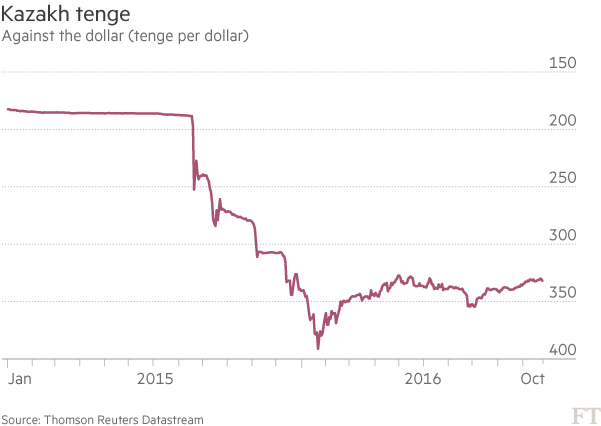
Photo: Kazakhstan currency trading risk analysis financial charts, via www.ft.com
On a spreadsheet, the tenge carry trade looks almost irresistible. Kazakhstan's National Bank has maintained benchmark interest rates that dwarf those available in most developed markets, and the arithmetic of borrowing in a low-yield currency to park capital in KZT-denominated instruments appears straightforward. Yet US traders who have pursued this strategy with real capital tell a remarkably consistent story: the returns they anticipated rarely materialize in full, and when conditions turn, the losses arrive faster than any model predicted.
Understanding why this gap between expectation and outcome persists — and why it tends to punish Western traders disproportionately — requires looking beyond the headline rate differential and into the structural mechanics of how Kazakhstan's currency market actually functions.
The Carry Trade Premise and Where It Breaks Down
The classic carry trade involves borrowing in a low-interest-rate currency, converting those funds into a higher-yielding currency, and earning the spread while the exchange rate holds reasonably stable. For years, the tenge's rate differential against the US dollar has made it a theoretically attractive destination for this strategy. The National Bank of Kazakhstan (NBK) has at various points maintained rates well above 10%, creating what appears to be a cushion large enough to absorb moderate currency depreciation.
The first flaw in this reasoning is the assumption that the exchange rate will behave predictably. Kazakhstan operates a managed float, which means the tenge does not move freely in response to market forces alone. The NBK intervenes — sometimes visibly, sometimes not — and the timing of those interventions is rarely telegraphed in advance. A position that looks stable for weeks can be disrupted overnight by a policy adjustment that the NBK announces with minimal warning. US traders accustomed to the relative transparency of Federal Reserve communications often underestimate how differently institutional communication works in Almaty.
Transaction Costs: The Invisible Drain
Perhaps the most underappreciated threat to carry trade profitability in Kazakhstan is the cumulative weight of transaction costs. Unlike major currency pairs where bid-ask spreads are measured in fractions of a pip, the KZT market carries spreads that can consume a meaningful portion of the rate differential before a position even opens.
Beyond the spread itself, US-based traders face a layered cost structure that includes currency conversion fees at the point of entry, custody or brokerage charges for holding tenge-denominated instruments, and — critically — conversion costs again at exit. When these round-trip costs are annualized and set against the nominal carry, the net advantage frequently shrinks to a level where even modest exchange rate movement pushes the trade into negative territory.
There is also the matter of repatriation. Moving capital out of Kazakhstan and back into dollars is not a frictionless process. Regulatory documentation requirements, processing timelines, and the occasional administrative bottleneck can delay exit and expose a trader to additional currency risk during the waiting period. These are not hypothetical inconveniences; they are recurring features of the market that experienced regional traders price in from the outset.
Case Study: The 2023 Reassessment
Consider the experience of several US-based retail traders who entered KZT carry positions in early 2023, attracted by a rate environment that appeared to offer a comfortable buffer against depreciation. The nominal carry suggested annualized gains in the range of 8 to 12 percent above their funding cost. By mid-year, however, a combination of factors had compressed those returns severely.
First, the tenge depreciated modestly but persistently against the dollar over a period of several months — not dramatically, but enough to erode a significant portion of the interest income. Second, liquidity in the forward market thinned unexpectedly during a period of regional uncertainty, forcing some traders to close positions at less favorable rates than anticipated. Third, and most instructively, several traders discovered that the instruments they had used to access tenge yields carried embedded fees that had not been clearly disclosed at the point of entry.
The net result for this cohort was not catastrophic, but it was sobering: after accounting for all costs, the realized return was a fraction of what the initial rate differential had implied. A few traders who had employed leverage amplified these losses substantially.
Policy Reversal Risk: A Structural Feature, Not an Anomaly
One of the most dangerous assumptions a US carry trader can bring to Kazakhstan is that the current policy environment will persist long enough to allow a position to mature as planned. The NBK has demonstrated a willingness to adjust rates, modify intervention thresholds, and shift its managed float parameters in response to external pressures — including commodity price swings, regional geopolitical developments, and capital flow dynamics within the broader Eurasian Economic Union framework.
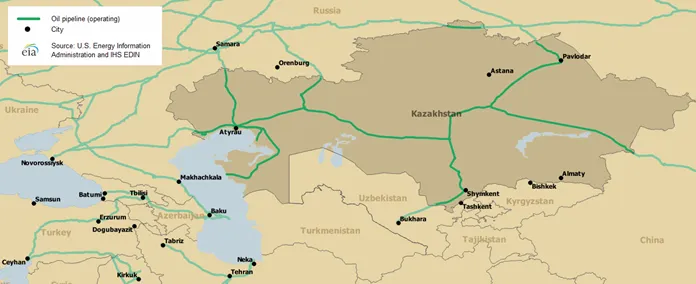
Because Kazakhstan's economy remains heavily exposed to oil export revenues, a sharp move in crude prices can rapidly alter the NBK's calculus. A rate cut intended to stimulate domestic activity, or a sudden widening of the tenge's trading band, can eliminate months of carry income in a matter of days. These events are not rare; they are a recurring feature of the policy landscape that any serious participant in this market must account for.
Building a Realistic Framework for True Risk-Adjusted Returns
For US traders who remain interested in the tenge carry trade despite these challenges, the path to sustainable performance begins with honest arithmetic. Before entering any position, a rigorous pre-trade calculation should include the following components:
Gross carry: The headline interest rate differential, unadjusted.
Transaction cost adjustment: A realistic estimate of round-trip costs, including spreads, conversion fees, and any custody or brokerage charges. In the KZT market, this figure should be treated conservatively — assume it will be higher than your broker's initial quote.
Liquidity risk premium: An explicit allowance for the possibility that exit conditions will be less favorable than entry conditions. Thin markets punish sellers, and the KZT forward market is thin by any global standard.
Policy reversal scenario: A stress test that models the impact of a 5 to 15 percent tenge depreciation occurring within the holding period. If the position cannot survive this scenario without catastrophic loss, the sizing is too aggressive.
Repatriation timeline buffer: An estimate of how long it may take to move capital back into dollars, and the currency exposure that exists during that window.
When traders apply this framework honestly, many find that the apparent attractiveness of the KZT carry trade diminishes considerably. That is not an argument against the trade — it is an argument for approaching it with appropriate position sizing, realistic return expectations, and a clear exit plan established before entry rather than after.
The Discipline That Separates Survivors from Casualties
The traders who have navigated Kazakhstan's carry environment most successfully share a common characteristic: they treat the tenge not as a simple yield vehicle but as a complex, policy-sensitive asset that requires active management. They maintain smaller positions than the nominal rate differential might seem to justify, they set hard stop-loss thresholds tied to exchange rate levels rather than calendar dates, and they build in explicit allowances for the costs and delays that are endemic to this market.
For US investors drawn to Central Asian currency markets by the promise of uncorrelated yield, Kazakhstan does offer genuine opportunities. But those opportunities are best accessed with eyes fully open to the structural realities that have, time and again, turned a promising carry trade into an expensive lesson in emerging market complexity.