From Combine to Currency: Building a Wheat-and-Rail Dashboard for Tenge Trades
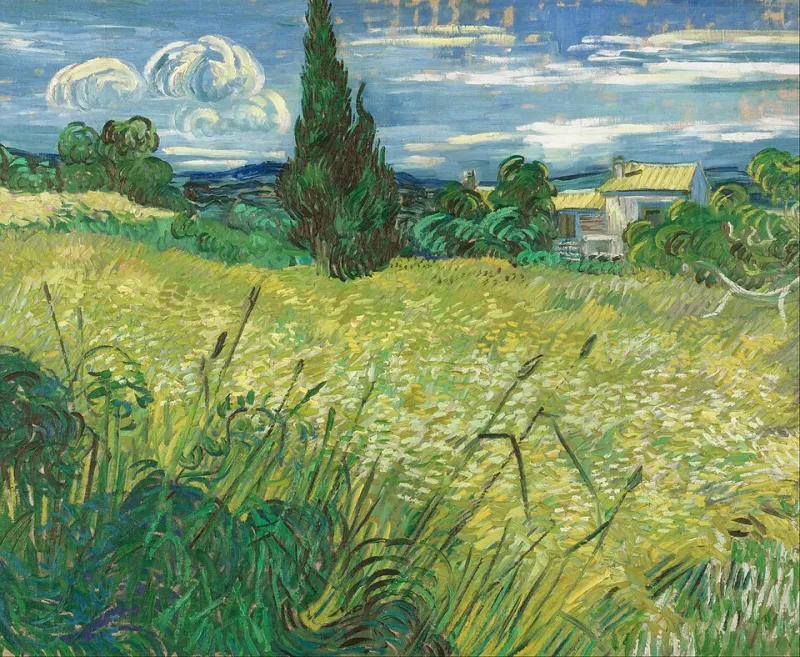
Photo: Vincent van Gogh, Public domain, via Wikimedia Commons
Ask a US macro trader what moves the tenge and the answer is usually oil. That answer is incomplete. Kazakhstan is also one of the world's major wheat exporters, and its grain moves to market through a rail and port network that can tighten or loosen the country's foreign-currency earnings with little warning. For a currency that depends on export conversion and cross-border flows, the wheat corridor is not a niche agricultural story. It is an FX input.
The transmission channel is straightforward, but it is easy to miss because it operates on a different calendar than energy markets. Wheat is seasonal. Rail logistics are physical. Export policy is administrative. Each can change the timing and size of foreign-currency inflows into Kazakhstan, and those inflows eventually touch the tenge.
The Wheat-to-Tenge Transmission Channel
Start with the harvest. A strong crop creates exportable surplus. A weak crop does the opposite. But the currency effect depends on more than production. It depends on whether the grain can reach port, whether rail capacity is available, whether export tariffs or restrictions apply, and whether global prices make the trade worthwhile after logistics costs.
When grain exports flow smoothly, exporters earn foreign currency and convert part of it into tenge to pay local costs, taxes, and wages. That conversion supports the tenge. When logistics tighten or policy changes raise costs, export revenue may be delayed or reduced. The tenge loses a source of demand. The effect is rarely immediate, but it can persist for weeks or months, especially during the export window.
There is also a sentiment channel. Global wheat prices, crop conditions, and export bans in the region can change how foreign investors perceive Kazakhstan's external balance. That perception can affect flows before the actual export data changes.
The Data Points That Matter
A useful dashboard does not need dozens of indicators. It needs the ones that map directly to the transmission channel. Four panels are enough to start.
Production and supply. Track Kazakhstan's grain harvest estimates, winter wheat conditions, and regional crop reports. The US Department of Agriculture's Foreign Agricultural Service attaché reports are a practical starting point, alongside Kazakhstan's Ministry of Agriculture and national statistics releases. The goal is not to forecast the harvest precisely. It is to know whether the exportable surplus is rising or falling.
Logistics and rail. Kazakhstan's grain exports depend heavily on rail. Track rail tariff decisions, grain loading volumes, and port throughput at Caspian and Black Sea corridors. Rail bottlenecks can turn a strong harvest into a slow export season. A tariff increase can compress exporter margins and delay conversion flows.
Trade policy. Export quotas, bans, and licensing rules can change the timing of shipments. A policy that restricts exports may lower near-term foreign-currency earnings even if it supports domestic supply. US traders should watch official decrees and industry association statements, not just news headlines.
Prices and competitiveness. Global wheat benchmarks matter, but they are not a direct proxy for Kazakh tenge flows. Chicago and Kansas City wheat futures reflect global sentiment and can be useful as a directional filter. The more relevant question is whether Kazakh grain is competitive after rail and port costs. If logistics costs rise faster than global prices, export volumes can stall even in a strong price environment.
A Simple Scorecard
A dashboard becomes useful when it produces a view, not just a data dump. A basic scorecard can be built from four signals:
| Signal | Positive for tenge | Negative for tenge |
|---|---|---|
| Harvest outlook | Rising exportable surplus | Drought, frost, or lower yields |
| Rail logistics | Falling tariffs, smooth loading, port access | Tariff hikes, bottlenecks, delays |
| Trade policy | Open export regime | Quotas, bans, or licensing friction |
| Export economics | Global prices strong versus logistics costs | Margins squeezed by rail or port costs |
This is not a trading system. It is a context tool. If three of the four panels are positive, the wheat corridor is likely supportive for tenge flows. If two or more are negative, the tenge may face a quieter headwind that oil headlines do not capture.
How to Use It Alongside FX Signals
The dashboard should sit next to traditional FX inputs, not replace them. Rates, oil, reserve data, and local liquidity still drive short-term USD/KZT moves. The wheat corridor is better suited to medium-term positioning and risk assessment. It can help a US desk decide whether to fade a tenge rally or respect it, and whether a selloff is driven by broad emerging-market risk or by a domestic export shock.
A practical routine is to review the dashboard monthly and around major harvest and export reports. Compare the scorecard with USD/KZT momentum. If the currency is strong while the wheat corridor is deteriorating, the rally may be fragile. If the currency is weak while the corridor is improving, the selloff may be overextended.
The Overlooked Input
Oil will remain the headline driver for Kazakhstan. It is too large and too liquid to ignore. But wheat, rails, and export logistics are part of the same external balance story. For US traders, the edge is not in discovering a secret indicator. It is in building a repeatable process that captures a flow the crowd does not watch closely.
ForexKZ's approach is to treat the tenge as a currency with multiple transmission channels. The grain corridor is one of them. It does not need to dominate the thesis. It only needs to be on the dashboard.