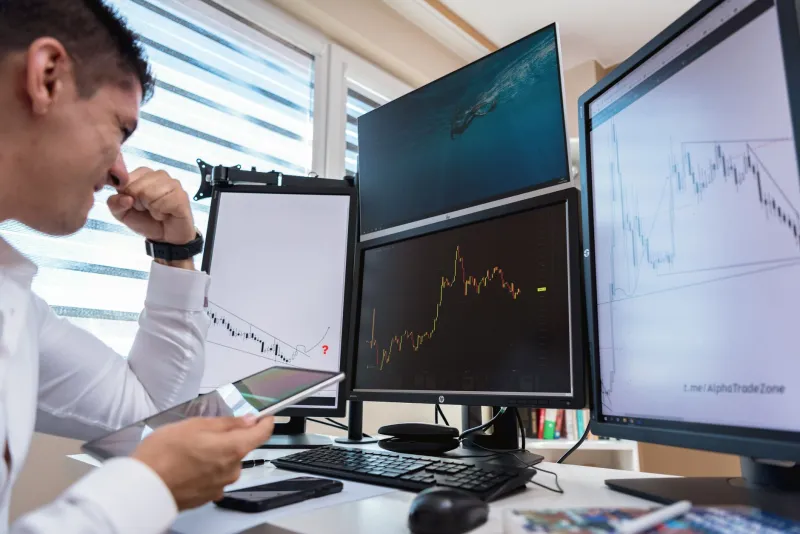
Trading the Tenge Before Your First Coffee: A Practical Almaty-First Routine for the American Desk

Why the Clock Is the First Instrument You Build
Every US trader who has dabbled in the tenge learns the same lesson within a week: the currency does most of its real work while you're unconscious. Almaty sits at UTC+5, which means the National Bank of Kazakhstan's operations, domestic bank liquidity, and regional flows concentrate in a window that runs from roughly 8 p.m. to 2 a.m. Central Time. That's not an inconvenience — it's a structural feature of the market, and your routine has to be built around it rather than in spite of it.
The good news: you don't need to become a nocturnal creature. You need to become an organized one.
Mapping the Sessions That Actually Matter
The KZT liquidity day has three meaningful phases.
Phase one: Almaty morning (roughly 10 p.m.–1 a.m. CT). Domestic banks settle, and the NBK frequently conducts its operations in this window. Spreads onshore are tightest here, and any central bank intervention or reference-rate adjustment tends to print early. If you can spare twenty minutes before bed, this is the window to check.
Phase two: The European overlap (1 a.m.–5 a.m. CT). London's arrival brings offshore KZT/NDF activity and wider hedging flows. Most retail US brokers show thinner quotes here, but the direction of the move — if there is one — is often set.
Phase three: The US handoff (7 a.m.–10 a.m. CT). By the time you're commuting or logging on, Kazakhstan's day is nearly over. This is when any overnight dislocation gets priced into the offshore quotes you can actually access. Think of it as the settlement of a story that was written while you slept.
The Tool Stack: Four Screens, One Notebook
You don't need a Bloomberg terminal. You need four things:
- A price-alert layer with timezone discipline. Set alerts on KZT pairs (or KZT-correlated proxies like USD/RUB and Brent) at levels defined in Almaty time, not yours. Most retail platforms — OANDA, Interactive Brokers, CFD providers — support conditional alerts. Anchor them to the phases above.
- An NBK calendar. The National Bank publishes its operational schedule and monetary policy decisions on fixed dates. Convert every one to your local time and put it in your phone's calendar with a two-hour reminder.
- An energy tape. Brent and Urals crude are the tenge's heartbeat. A simple commodity watchlist checked once at your lunch break tells you whether the overnight move was oil-driven or flow-driven.
- A one-line journal. After each session, write a single sentence: what the tenge did overnight and why you believe it. Over a quarter, this becomes the most honest dataset you own.
A Sample Day, Start to Finish
- 9:45 p.m. CT (pre-sleep, 10 minutes): Scan the NBK operations calendar for tomorrow, check Brent's close, review any alerts that fired. Place or adjust conditional orders.
- 6:30 a.m. CT (wake-up, 5 minutes): Check the overnight high/low on KZT proxies. Note any gap versus your last journal entry.
- 12:00 p.m. CT (lunch, 10 minutes): Review the European session's aftermath, read any Kazakhstan newswire headlines in translation, adjust stops.
- Friday, 4 p.m. CT (weekly review, 30 minutes): Flat the book or hedge the weekend. Tenge weekends carry oil-price risk and regional headline risk that no retail account should hold naked.
Execution Realities Worth Respecting
Direct KZT access from US brokerages remains limited; most American traders reach the tenge through CFDs, offshore NDF proxies, or correlated emerging-market baskets. That means your fills are only as good as your provider's liquidity, and liquidity is thinnest precisely during phase one. The practical consequence: favor limit orders over market orders, size down during Almaty's early hours, and treat any quote that looks too good as a warning rather than a gift.
The Compounding Effect
None of this is glamorous. It's a routine — twenty to thirty minutes a day, most of it asynchronous. But the traders who consistently extract signal from Kazakhstan's market are the ones who respect its clock. The tenge rewards preparation that happens before the move, not reaction after it. Build the desk around Almaty's schedule, and the 3 a.m. problem becomes a quiet, durable advantage.