Against the Current: How the Tenge Strengthens When Global Markets Panic—and What US Traders Should Do About It
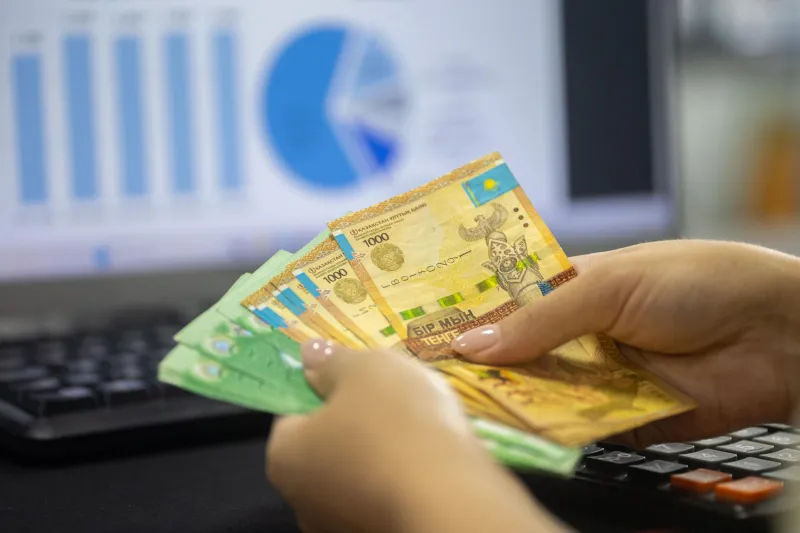
In the standard playbook of global risk management, emerging market currencies move in one direction when fear grips financial markets: down. Capital flees to the dollar, the yen, and Swiss franc. Spreads widen. Carry trades unwind. The pattern is so reliable that most institutional desks treat it as axiomatic.
The Kazakhstani Tenge, however, has been quietly refusing to follow the script.
Over multiple episodes of global financial stress—spanning Federal Reserve tightening cycles, geopolitical shocks, and commodity demand scares—the Tenge has demonstrated a recurring tendency to hold firm or even appreciate modestly against a basket of peer emerging market currencies. For US-based traders who have noticed this anomaly and taken the time to understand it, the implications are significant. For those who have not, the opportunity is still open.
Why the Tenge Doesn't Behave Like Other Emerging Market Currencies
The starting point for understanding this divergence is Kazakhstan's economic architecture. Unlike many emerging economies that are net importers of energy and raw materials, Kazakhstan is a substantial net exporter. Crude oil, uranium, copper, and wheat form the backbone of its export revenue. When global risk sentiment deteriorates, the catalysts are often monetary in nature—Federal Reserve policy shifts, credit market stress, or dollar liquidity squeezes—rather than commodity-demand collapses.
In those monetary stress episodes, commodity prices frequently hold up or decline only modestly relative to the broader risk selloff. Kazakhstan's current account position therefore remains relatively intact even as investor sentiment sours globally. That external balance provides a structural floor beneath the Tenge that simply does not exist for countries running persistent deficits.
The National Bank of Kazakhstan compounds this effect through its intervention framework. Rather than allowing the Tenge to track regional contagion passively, the central bank has demonstrated a willingness to deploy foreign exchange reserves with tactical precision during stress periods, smoothing volatility and signaling policy resolve to the market. This active management posture distinguishes Kazakhstan from peers who either lack the reserves or the institutional discipline to intervene credibly.
The Correlation Data US Traders Are Missing
When you map the Tenge's performance against a composite of emerging market currency indices during periods of elevated VIX readings—broadly defined as the CBOE Volatility Index sustaining above 25 for more than five consecutive trading sessions—a pattern emerges that most US retail and even institutional traders have not priced into their models.
During several such episodes over the past three years, the Tenge either outperformed its emerging market peers by a statistically meaningful margin or, in a handful of cases, posted modest nominal gains against the dollar at precisely the moments when currencies like the South African rand, the Turkish lira, and the Brazilian real were experiencing sharp drawdowns.
This inverse or decorrelated behavior is not coincidental. It reflects the intersection of Kazakhstan's commodity export structure, the National Bank's intervention posture, and the relatively limited participation of hot money—speculative international capital that exits emerging markets rapidly during risk-off episodes—in the Tenge market. Thin speculative positioning means there is simply less forced selling when global sentiment turns.
Practical Hedging Applications for US Portfolios
Understanding the mechanics is valuable. Translating that understanding into executable strategy is where the real work begins.
For US investors carrying meaningful emerging market equity or fixed income exposure, the Tenge offers an unconventional but potentially effective partial hedge. The logic is straightforward: if a portion of your portfolio is vulnerable to emerging market contagion—think positions in funds tracking the MSCI Emerging Markets index or high-yield sovereign debt—then a long Tenge position, sized appropriately, can provide a degree of offset during the risk-off episodes when that broader exposure is most likely to suffer.
The hedge is imperfect, as all real-world hedges are. Kazakhstan is not immune to severe commodity demand shocks or to geopolitical disruptions that directly affect its own economy. But for the specific risk scenario of a monetary-driven global risk-off move—a Fed-induced dollar surge, a credit market seizure, or a sudden spike in cross-asset volatility—the Tenge's historical behavior suggests it absorbs the shock differently than most of its peers.
Position sizing for this type of hedge typically falls in the range of 5 to 15 percent of the overall emerging market exposure being hedged, depending on the trader's conviction level and the specific nature of the risk being offset. US traders accessing the Tenge through non-deliverable forward contracts or through platforms with direct access to Kazakhstan's domestic foreign exchange market should factor transaction costs and liquidity conditions carefully into their sizing calculations.
Tactical Entry Points During Global Stress
Beyond portfolio hedging, the Tenge's behavior during risk-off episodes creates tactical trading opportunities for US investors willing to move quickly and size conservatively.
The most consistent entry signal has historically appeared not at the onset of a global risk event but approximately two to four trading sessions into the initial selloff, once the indiscriminate emerging market liquidation phase has run its course. At that juncture, the Tenge frequently begins to diverge visibly from peers, and the risk-reward profile of a long Tenge position improves meaningfully.
Confirmation signals worth monitoring include: stabilization or recovery in Brent crude prices following the initial risk-off dip, public statements or observable reserve deployment activity from the National Bank of Kazakhstan, and a narrowing of bid-ask spreads in the Tenge's non-deliverable forward market—a sign that market makers are regaining confidence in the currency's near-term direction.
Exit discipline is equally important. The Tenge's outperformance during risk-off episodes tends to be a medium-term phenomenon rather than a sustained multi-month trend. Once global risk sentiment stabilizes and capital begins flowing back into emerging markets broadly, the Tenge's relative advantage diminishes, and positions should be closed or reduced accordingly.
Risks That Deserve Honest Acknowledgment
No analytical framework earns credibility without a candid treatment of its limitations, and the Tenge's inverse risk-sentiment pattern is no exception.
A severe and sustained collapse in global commodity demand—the kind triggered by a deep recession in China or a catastrophic disruption to global trade flows—would undermine the very export revenue dynamics that support the Tenge's resilience. In that scenario, the currency's decorrelation from emerging market peers would likely break down, and positions built on the inverse-sentiment thesis would face significant losses.
Additionally, Kazakhstan's political risk profile, while often underestimated by outside observers, is not negligible. Domestic political shocks have historically produced sharp, short-lived Tenge depreciations that are difficult to anticipate using macroeconomic models alone.
Finally, US traders should remain attentive to the liquidity constraints of the Tenge market. Position sizes that are manageable in liquid G10 pairs can become problematic in a currency with Kazakhstan's market depth, particularly during the acute phase of a global stress event when bid-ask spreads can widen substantially.
The Strategic Case for Paying Attention
The Tenge's counterintuitive behavior during periods of global financial stress is not a quirk to be dismissed. It is a structural feature of Kazakhstan's economic and institutional architecture that creates repeatable, exploitable patterns for traders who take the time to understand it.
For US investors managing portfolios with emerging market exposure, the ability to identify a currency that moves differently when everything else is selling off represents genuine diversification—the kind that holds up precisely when it is most needed. The Tenge, approached with appropriate position sizing and realistic expectations, offers exactly that.
At ForexKZ, we continue to monitor the evolving relationship between global risk dynamics and Kazakhstan's currency markets, providing US-based traders with the granular, regionally informed analysis needed to act on opportunities that most Western-facing platforms simply do not cover.