Reserve Reckoning: How the Global Shift Away from Dollar Dominance Is Quietly Rewiring the Tenge's Long-Term Trajectory
The phrase "de-dollarization" has become something of a buzzword in financial media, often deployed with more drama than precision. But strip away the geopolitical theater and what remains is a measurable, methodical process: central banks around the world are, with deliberate patience, trimming the share of US dollars held in their official reserves. For traders focused on USD/KZT, this process is no longer a distant macro abstraction. It is becoming a structural driver that deserves serious analytical attention.
The Quiet Rebalancing Beneath the Headlines
IMF data tracking global reserve composition has shown a steady erosion in the dollar's share over the past decade—from roughly 66 percent in 2015 to levels approaching 58 percent in recent years. That decline, while gradual by historical standards, represents an enormous volume of capital seeking alternative destinations. The beneficiaries have not been uniform. The euro and Chinese renminbi have absorbed some of the flow, but a more diffuse diversification is also underway, with smaller currencies and commodity-linked assets capturing incremental allocations.
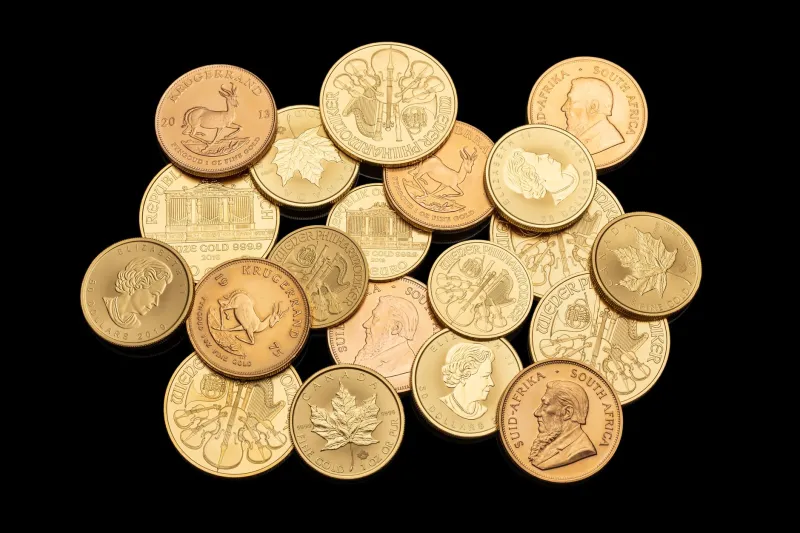
Kazakhstan's National Bank has itself been an active participant in this rebalancing. Its reserve portfolio has increasingly incorporated gold—a shift that mirrors behavior seen across Central Asian peers including Uzbekistan and Kyrgyzstan—while simultaneously reducing the proportional weight of dollar-denominated instruments. This is not a headline-grabbing pivot; it is a quiet but consistent repositioning that, when viewed across multiple quarters, tells a coherent story.
For US traders accustomed to treating USD/KZT as a straightforward commodity-currency pair governed primarily by oil prices, this reserve dynamic introduces a second structural variable that operates on a longer time horizon but with comparable force.
Geopolitical Fragmentation as a Reserve Accelerant
The 2022 freezing of Russian central bank assets held in Western institutions sent a signal that reverberated well beyond Moscow. For central banks in Kazakhstan and across the broader post-Soviet space, the episode was a vivid demonstration that reserve assets denominated in dollars or euros and held in Western custodial systems carry a form of political risk that traditional risk models had not adequately priced.
Kazakhstan occupies a particularly sensitive position in this landscape. Its geographic proximity to Russia, its deep trade relationships with China, and its ambitions as a regional financial hub between East and West create a set of incentives that point clearly toward reserve diversification. Holding a concentrated dollar position is no longer simply a question of return optimization—it has become a question of sovereign financial security.
This geopolitical dimension is accelerating reserve shifts that might otherwise have unfolded over decades. The timeline has compressed, and the implications for USD/KZT are not trivial. When Kazakhstan's National Bank reduces its dollar holdings, those transactions pass through the foreign exchange market. The Tenge does not benefit passively from this process; it benefits mechanically, as demand for KZT-denominated assets rises relative to dollar instruments.
What the 24-to-36-Month Window Looks Like for USD/KZT
Positioning for this structural shift requires a framework that differs from standard short-term technical analysis. The reserve rebalancing dynamic does not produce sharp, event-driven price moves. It produces directional pressure that accumulates over quarters, interrupted by cyclical volatility but not reversed by it.
Several specific conditions are worth monitoring for US traders attempting to calibrate their USD/KZT exposure:
Commodity revenue allocation: Kazakhstan's oil export revenues, channeled through the National Fund, are a primary source of dollar inflows into the economy. When oil prices are elevated, the National Fund accumulates reserves at a faster pace. The composition decisions made at that point—how much to hold in dollars versus alternative assets—will be a leading indicator of medium-term Tenge demand.
Bilateral currency agreements: Kazakhstan has been expanding the use of local currencies in trade settlement with China, Russia, and several Gulf Cooperation Council members. Each agreement that reduces the dollar's role as an intermediary currency in Kazakhstani trade removes a structural source of dollar demand and, by extension, supports the Tenge's relative standing.
Gold accumulation pace: The National Bank's gold purchases are publicly reported, albeit with a lag. Accelerating gold accumulation typically signals a parallel reduction in dollar exposure. US traders should treat the gold purchase trend line as a proxy for the reserve diversification trajectory.
Practical Implications for US Traders
None of this argues for an aggressive short-dollar, long-Tenge position in isolation. The Tenge remains subject to oil price volatility, regional risk sentiment, and the periodic interventions of the National Bank itself. But the reserve rebalancing trend provides a structural tailwind that changes the risk-reward calculus for medium-term positioning.
US traders who have historically approached USD/KZT as a high-beta commodity play may find that the pair increasingly behaves with greater independence from the dollar index—not because Kazakhstan's economy has decoupled from global commodity cycles, but because the institutional demand for Tenge-denominated assets is growing from a base that is no longer negligible.
The dollar's reserve dominance is not ending. But it is diminishing, and Kazakhstan is positioned at the edge of that diminishment in ways that create genuine, exploitable opportunities for traders willing to look beyond the next quarterly earnings cycle.
At ForexKZ, we track these structural shifts precisely because they are the kind of signals that short-horizon analysis tends to miss—and that medium-term positioning tends to reward.