The New Ore Order: Reading the Tenge Through Washington's Critical Minerals Push
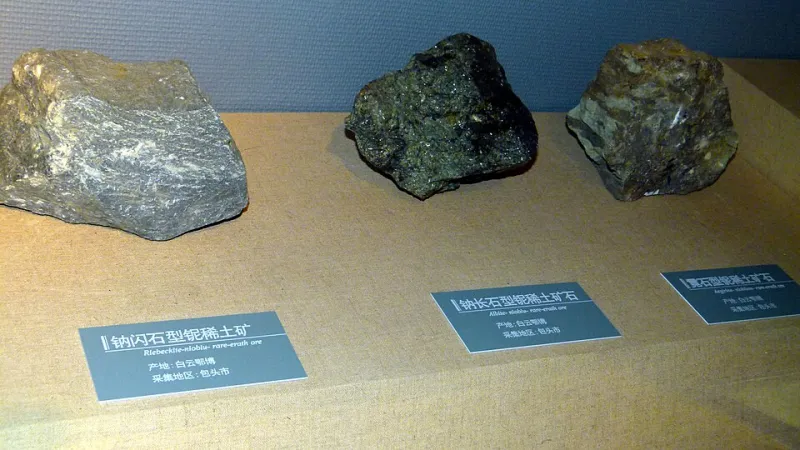
Photo: Brücke-Osteuropa, CC BY-SA 3.0, via Wikimedia Commons
For most of the past two decades, the tenge's fundamental story has been narrated in barrels. Oil output, pipeline throughput, and the Brent benchmark did most of the explanatory work, and US desks learned to treat Kazakhstan as a leveraged crude proxy with a central bank attached. That framing is now incomplete. Since 2023, Washington and Astana have moved critical minerals from the margins of bilateral dialogue toward its center, and the paperwork is beginning to convert into capital commitments. For currency traders, the sequence matters far more than the announcement.
From Communiqué to Capex
The first phase of any resource partnership produces photographs and memoranda. Those documents are not tradable. What matters is the second phase: binding offtake agreements with defined volumes and price floors, final investment decisions, engineering and construction contracts, and — critically for Kazakhstan — the export credit and development finance that unlocks everything downstream.
Each step alters a different part of the macro ledger. An offtake agreement strengthens the medium-term export pipeline. A final investment decision converts into imported capital goods, which widens the trade deficit in the near term before narrowing it later. Development finance from US institutions changes the composition of the external balance and, at the margin, the sovereign risk premium embedded in every tenge forward.
Why Minerals Do Not Behave Like Oil
Oil is a price-taker's business: Kazakhstan sells into a deep, transparent global market, and the value of the export is set by a benchmark it cannot influence. Critical minerals are different. Lithium, rare earth concentrates, and battery-grade intermediates trade in thinner markets, frequently under bilateral contract, with supply chains deliberately shaped by policy in Washington, Brussels, and Beijing alike.
That distinction changes the currency math. An oil discovery changes the size of the export base; a minerals partnership changes the structure of the capital account. Long-horizon foreign direct investment is far less flighty than portfolio flow, and stickier inflows tend to compress the risk premium rather than simply lift the spot rate. A tenge that is supported by twenty-year offtake contracts behaves differently from one supported by a single strong quarter of crude receipts.
The Milestones Worth Diarizing
Four checkpoints deserve a place on any US desk's calendar.
The first is the conversion of framework agreements into named-volume offtakes. Watch for specific tonnage, specific pricing mechanisms, and specific delivery windows. Language that describes cooperation without quantities is noise.
The second is financing. When the US Export-Import Bank, the Development Finance Corporation, or a consortium of commercial lenders signs on, the project crosses a threshold from aspiration to construction. Financing announcements tend to move sovereign spreads before they move the spot rate, which makes them useful leading indicators for anyone running tenge exposure.
The third is processing localization. Kazakhstan has been explicit about wanting midstream and downstream capacity on its own soil rather than exporting raw concentrate. Every refining or cathode-active-material plant that is announced is a promise of future electricity demand, future skilled employment, and future non-oil export receipts — three variables that feed directly into the long-run tenge valuation debate.
The fourth is first shipment. This is where the current account begins to change in the hard data. It is also, reliably, where the sell-side publishes its first upgrade note, which is generally a poor entry point.
What the Currency Sees Before the Headline Does
Currency markets discount. The tenge does not wait for a mine to open; it reacts when the probability distribution of future dollar inflows shifts. That is why the most tradeable moments in this story are usually the middle ones — the financing close, the construction start, the announcement of a second tranche of investment.
There is a second-order effect that US traders routinely miss: mineral partnerships pull in infrastructure. Rail capacity, port access at Aktau and Kuryk, power generation, and water supply all have to be built or expanded. Those projects are denominated substantially in foreign currency and executed by foreign contractors, which means they generate import demand. In the near term, that is a drag on the current account; over the medium term, it is capacity that lowers the cost of exporting. The tenge typically weakens modestly during construction and strengthens after commissioning, a pattern worth noting for anyone sizing multi-year positions.
The Obvious Risks
Neutral analysis requires acknowledging the counterarguments. Commodity-linked industrial policy is slow, and timelines slip. Rare earth processing remains dominated by a single jurisdiction, which means price formation for many of these products is opaque and politically influenced. Kazakhstan's investment climate is improving but still carries execution risk around permitting, local content rules, and currency-convertibility frictions for foreign operators.
There is also a straightforward timing risk: if the Federal Reserve holds rates higher for longer, the dollar side of the equation can overwhelm any improvement in Kazakhstan's structural story. The tenge is not immune to the broad dollar cycle, and no single commodity partnership repeals that.
A Practical Watchlist
For US portfolio managers and corporate hedgers, the actionable version of this thesis is modest and disciplined. Track the financing calendar rather than the summit calendar. Treat development-bank signings as medium-term constructive signals for the tenge. Expect construction-phase import demand to produce temporary current-account softness. And resist the temptation to trade headlines that describe intent rather than obligation.
The tenge of 2026 is being repriced by forces that have almost nothing to do with the next OPEC+ meeting. Rare earths will not replace oil in Kazakhstan's export mix any time soon, but they are beginning to change how global capital prices the country's long-term dollar earnings — and that, ultimately, is what a currency is.