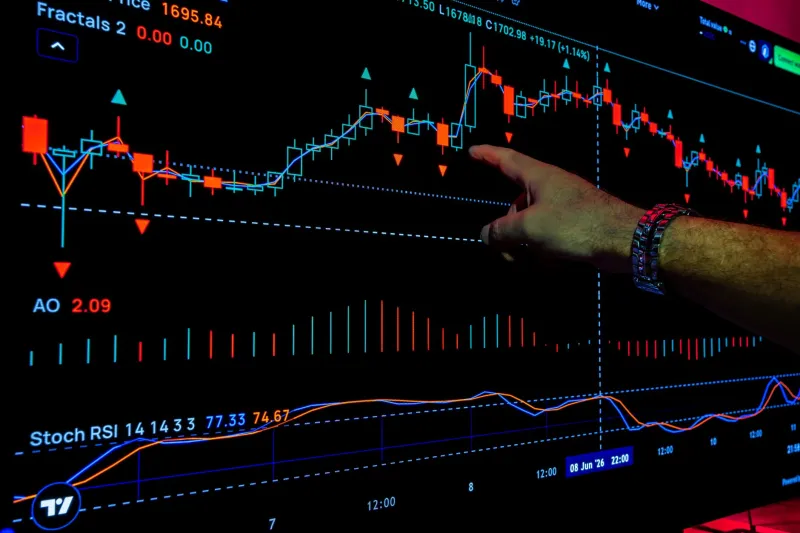
Caught Off Guard: How Kazakhstan's Shifting Policy Signals Are Blindsiding Algorithmic Traders
In the world of algorithmic trading, speed and pattern recognition are everything. Quantitative systems built by institutional desks in New York and Chicago are extraordinarily effective at parsing central bank communications from the Federal Reserve, the European Central Bank, and the Bank of England. These institutions have spent decades cultivating predictable, structured communication frameworks—and the machines have learned to read them with near-surgical precision.
The National Bank of Kazakhstan operates by a different set of rules entirely. And that difference is quietly creating one of the more underappreciated edges available to informed traders operating in the Tenge market today.
The Communication Gap That Algorithms Cannot Close
Most major central banks have adopted what economists call "forward guidance" as a cornerstone of monetary policy. The premise is straightforward: by telegraphing future rate decisions, central banks reduce market volatility and help investors price assets more efficiently. The Fed's dot plot, the ECB's press conference cadence, and the Bank of England's Monetary Policy Committee minutes are all designed with this transparency objective in mind.
Astana's approach is considerably more opaque—not by accident, but by institutional design. The National Bank of Kazakhstan (NBK) operates within a framework where policy decisions are influenced by a broader set of domestic political and economic considerations that are rarely made explicit in formal communications. Oil revenue flows from the Kashagan and Tengiz fields, cross-border capital pressures from neighboring Russia and China, and the NBK's periodic interventions in the currency market all factor into rate decisions in ways that standard natural language processing models are poorly equipped to decode.
When the NBK shifts its policy stance, it frequently does so with minimal advance signaling in the formats that algorithmic systems are designed to monitor. The result is a pricing dislocation that can persist for several hours after an announcement—a window that discretionary traders who understand the regional context can exploit with meaningful consistency.
Anatomy of a Policy Surprise
To understand why these windows exist, it helps to walk through the typical sequence of events surrounding an NBK policy decision.
The NBK holds its monetary policy board meetings on a schedule that is publicly available, but the pre-meeting communication from senior officials tends to be sparse compared to Western central bank norms. There are no equivalent "blackout period" press leaks, no coordinated background briefings with major financial media outlets, and no formal mechanism for market participants to gauge consensus expectations the way they might through Fed Funds futures pricing.
When a decision is released—particularly one that deviates from the narrow range of outcomes that offshore algorithmic systems have priced in—the Tenge can move sharply in the immediate aftermath. More importantly, the magnitude of that move is frequently disproportionate to the fundamental significance of the policy shift, precisely because automated liquidity provision withdraws quickly from a market that the algorithms have flagged as uncertain.
This liquidity vacuum, typically lasting between 90 minutes and four hours depending on the degree of surprise, is where the informational edge concentrates.
What Informed Traders Are Actually Watching
For US-based traders willing to invest the analytical groundwork, several leading indicators have demonstrated consistent value in anticipating NBK policy direction ahead of formal announcements.
Tenge swap market pricing. The onshore USD/KZT swap curve is a more sensitive barometer of domestic liquidity conditions than the spot rate. Sustained pressure in the one-week and one-month swap tenors has historically preceded tightening moves by the NBK, often by seven to ten trading days.
NBK governor commentary in Kazakh-language outlets. This may sound obvious, but it is genuinely underappreciated. Statements made by NBK leadership in domestic media—particularly those published in Kazakh rather than Russian or English—frequently contain more candid assessments of policy thinking than the institution's formal English-language releases. Traders who rely exclusively on translated summaries are often working with a diluted version of the signal.
Commodity correlation breaks. Kazakhstan's economy remains substantially linked to hydrocarbon export revenues, and the Tenge typically moves in rough alignment with Brent crude under normal conditions. When that correlation breaks down—when crude rallies but the Tenge fails to follow, or vice versa—it frequently signals that the NBK is either intervening directly or preparing to shift its policy stance to manage currency pressures that commodity dynamics alone do not explain.
Cross-rate divergence with the Russian ruble. Despite the Tenge's ongoing structural decoupling from the ruble, short-term co-movement between the two currencies remains a feature of the market. When the KZT/RUB cross begins moving in an atypical direction relative to the broader emerging market risk environment, it can indicate that one or both central banks are preparing a policy adjustment.
The Hours That Matter Most
The trading window that emerges in the hours following an NBK policy surprise has a specific character that distinguishes it from the post-announcement volatility seen in more liquid markets.
Because the Tenge market is relatively thin by global standards, the initial price reaction to an unexpected decision tends to overshoot. Algorithmic systems, having flagged the event as outside their confidence parameters, pull back from market-making activity. This creates a spread-widening environment that is unfavorable for high-frequency strategies but actually beneficial for directional traders who have formed a view on the fundamental implications of the policy shift.
The mean-reversion opportunity typically materializes within the first two to three hours as domestic Kazakhstani banks and corporate hedgers begin to transact at the new price levels, gradually restoring two-way flow. Traders who enter during the initial overshoot phase and exit as liquidity normalizes have historically captured a meaningful portion of the correction move.
It is worth noting that this pattern is not guaranteed, and no trading edge persists indefinitely once it becomes widely recognized. However, given the structural barriers to entry in the Tenge market—including the regulatory complexity of accessing onshore instruments from a US base—the information asymmetry that produces this window is likely to remain durable for the foreseeable future.
Building a Framework, Not a Formula
US traders accustomed to the highly systematized world of G10 forex should resist the temptation to simply encode these observations into a new algorithmic rule set. The edge here is fundamentally qualitative in nature. It derives from understanding the institutional culture, communication norms, and regional political economy of a central bank that does not operate according to the transparency conventions that quantitative systems are built around.
That means developing genuine familiarity with Kazakhstani financial media, maintaining relationships with regional market participants who can provide contextual color, and building the patience to wait for the specific conditions that define an actionable opportunity rather than forcing trades based on incomplete pattern matching.
For traders willing to make that investment, the NBK's communication style is not a liability. It is, in the most precise sense of the term, an edge—one that the machines have not yet learned to close.